
Description
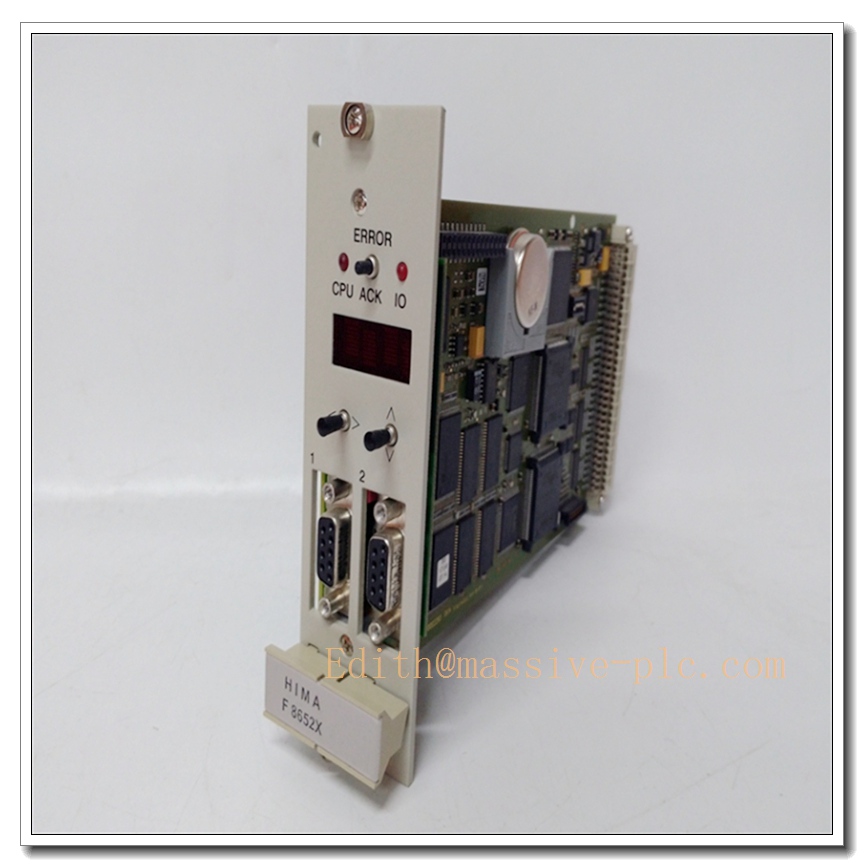
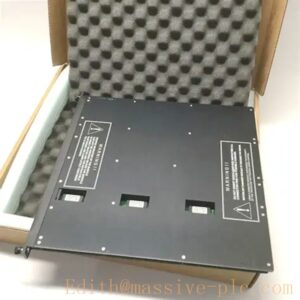
HIMA F-CPU (Fail-Safe CPU) TÜV-certified Safety Logic Solver for SIS, HIQuad X Series (F-CPU01)
Core Product Overview
The HIMA F-CPU (typically F-CPU01) is the safety processor core of the HIMA HIQuad X safety instrumented system, designed for safety-critical process applications up to SIL 3 (IEC 61508, IEC 61511). It adopts a 1oo2D dual synchronous processor architecture, continuously comparing calculation results between two internal CPUs; any mismatch triggers safe-state action. It executes safety application logic, performs comprehensive module self-tests, manages redundant synchronization and SafeEthernet safety communication, and works with HIMA safety I/O modules. Engineering is done via SILworX software. Widely used in ESD, FGS and BMS for oil & gas, LNG, power and chemical plants. Some legacy HIMA F-CPU variants (F8650E, F8652E) belong to older HIQuad H41q/H51q platforms; new HIQuad X uses F-CPU01.
Main Technical Specifications
- Part Number: F-CPU01 (HIQuad X)
- Manufacturer: HIMA Paul Hildebrandt (Germany)
- Device Type: Fail-Safe Safety CPU / Safety Logic Solver
- Safety Level: SIL 3, TÜV certified
- Architecture: 1oo2D dual synchronous processor, cross-comparison, continuous self-diagnostics
- Programming Tool: SILworX
- Safety Communication: SafeEthernet; redundant backplane bus
- Power Supply: 24 VDC from system backplane, wide voltage tolerance
- Cooling: Passive cooling, relies on rack airflow
- Operating Temperature: -20°C ~ +60°C
- Humidity: 10%–95% non-condensing
- Form Factor: Eurocard plug-in rack module
- Status: F-CPU01 is active HIQuad X product; older F8650E / F8650 are obsolete, available as surplus or refurbished spares
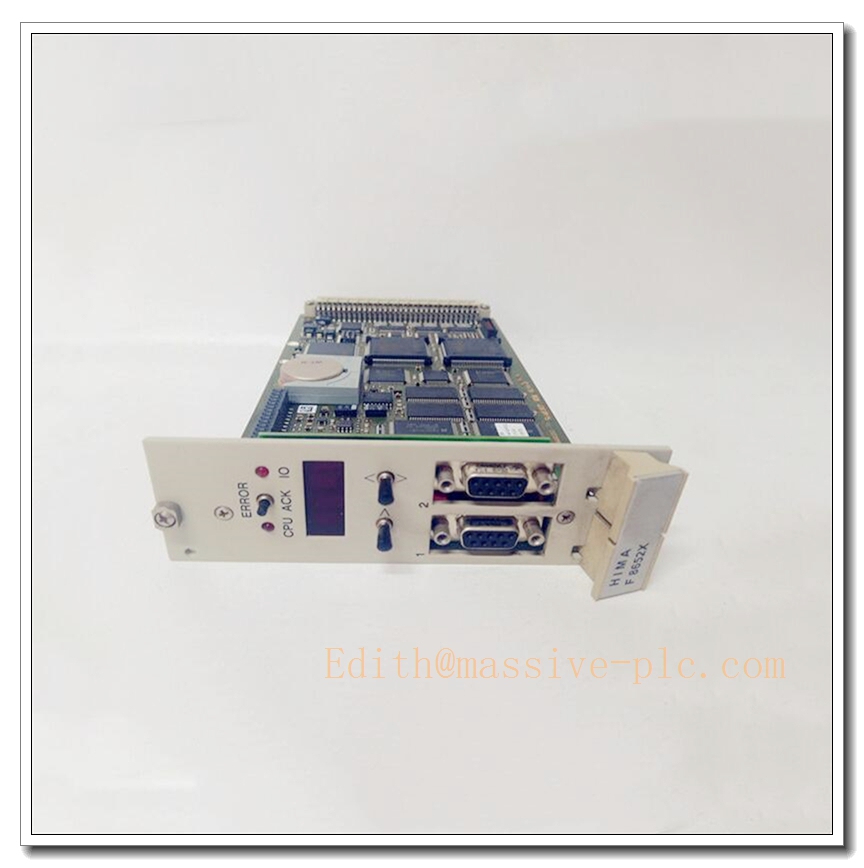
HIMA F-CPU
Same-Series Model Recommendations (8 Models)
- F-CPU01: HIQuad X main safety CPU (subject model)
- F8650E: Legacy H41q/H51q classic SIL3 CPU
- F8650X: HIMax high-performance safety CPU
- F8652E: H41q/H51q redundant CPU variant
- F35 011: HIMatrix compact SIL3 safety controller
- F60 CPU01: HIMatrix modular safety CPU
- F8627X: HIMax communication co-processor
- F8651X: HIMax redundant power module
Professional Quality Control & Testing Standard Operating Procedures
All surplus and refurbished HIMA F-CPU modules follow this inspection workflow:
- Visual Inspection: Check PCB, edge connectors, front-panel LEDs, capacitors and soldering; verify part number, serial and TÜV safety label.
- Backplane Power Bench Test: Install on matching HIQuad/HIMax backplane, apply 24VDC, confirm stable power rails without cycling or overcurrent.
- Boot & Firmware Validation: Complete power-on self-test, read firmware revision, confirm no permanent hardware fault codes.
- Dual-CPU Comparison Test: Verify 1oo2D cross-check function; inject internal fault simulation to validate fault detection.
- SafeEthernet & Backplane Test: Connect to HIMA safety I/O, validate safety telegram transmission and fault reporting.
- Safety Logic Test: Download SILworX test safety project, run scan cycle, verify trip logic and safe-state response.
- Thermal Soak Test: Operate at elevated cabinet temperature to expose intermittent memory, timing or connector faults.
- Final Cleaning & Packaging: Clean edge contacts, reset configuration, ESD packaging with printed test certificate.
New / Refurbished Module Installation Guidelines
- Pre-Installation Safety: Execute lockout-tagout; isolate SIS rack 24V supply and all field safety circuits to prevent spurious trips.
- Rack & Backplane Check: Confirm compatible HIQuad X backplane, protective earth, cabinet cooling and ventilation clearance.
- Mechanical Insertion: Align the F-CPU edge connector carefully, insert smoothly without force, secure front panel fasteners.
- Network & I/O Wiring: Terminate SafeEthernet and backplane links; use shielded cables, separate safety wiring from high-power cables.
- System Configuration: Use SILworX to configure hardware, assign safety addresses, compile safety program and generate safety CRC signature.
- Pre-Commissioning Functional Test: Power rack offline; test self-diagnostics, I/O wire-break detection, communication failure response and safe trip.
- Safety Acceptance: Perform site fault injection test, verify redundant synchronization, archive SILworX project and safety signature for audit.
Application Scenarios & Product Features
Typical Application Scenarios
- Emergency Shutdown System (ESD) for petrochemical, refinery and offshore platforms
- Fire and Gas System (FGS) flame and gas detection interlocks
- Burner Management System (BMS) for gas turbines and boiler safety
- LNG storage and compressor safety protection
- Power plant auxiliary safety interlocks
- Retrofit spare replacement for legacy HIMA HIQuad H41q/H51q racks
Core Product Features
- 1oo2D dual-core fault-tolerant architecture certified SIL 3
- Deterministic safety scan, continuous cross-comparison of dual processor results
- Comprehensive self-diagnosis covering CPU, memory, clock, bus and I/O channels
- SafeEthernet for high-integrity safety communication between rack nodes
- Redundancy support for bumpless takeover in dual-CPU configurations
- SILworX engineering software with safety signature and traceable change log
- Passive cooling, robust EMC design for noisy process cabinet environments
- Fail-safe response: force plant to predefined safe state upon detected hardware or communication fault
Frequently Asked Questions (FAQ)
Q1: What is the difference between HIMA F-CPU and Siemens F-CPU? A1: HIMA F-CPU is dedicated SIS safety logic solver for process ESD/FGS, based on 1oo2D. Siemens F-CPU is safety PLC for machine safety, uses PROFIsafe. Different platforms, engineering tools and typical industries.
Q2: Can I run non-safety control logic on HIMA F-CPU? A2: It is designed primarily for safety-related SIS logic. Non-safety DCS/PLC control normally runs on separate controllers, not on HIMA F-CPU.
Q3: Is HIMA F-CPU hot-swappable? A3: HIMax/HIQuad X support hot-swap hardware replacement, but removing an active F-CPU will interrupt safety execution and trigger safe trip. Replacement must be arranged under controlled shutdown or bypass procedures.
Q4: What software is required for programming HIMA F-CPU? A4: SILworX. Older H41q/H51q systems used ELOP II Factory.
Q5: What are common failure modes? A5: Edge connector oxidation, backup battery depletion, ageing electrolytic capacitors, SafeEthernet port ESD damage, flash firmware corruption from voltage transients.

 Start Chat