
Description
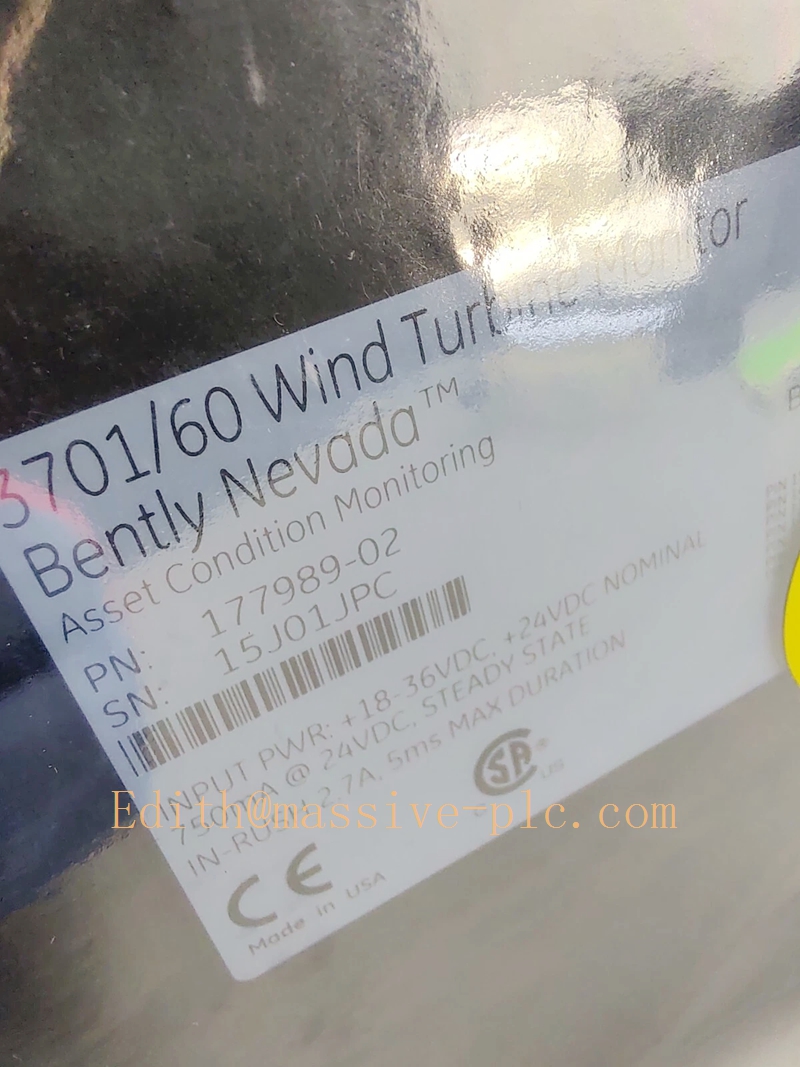
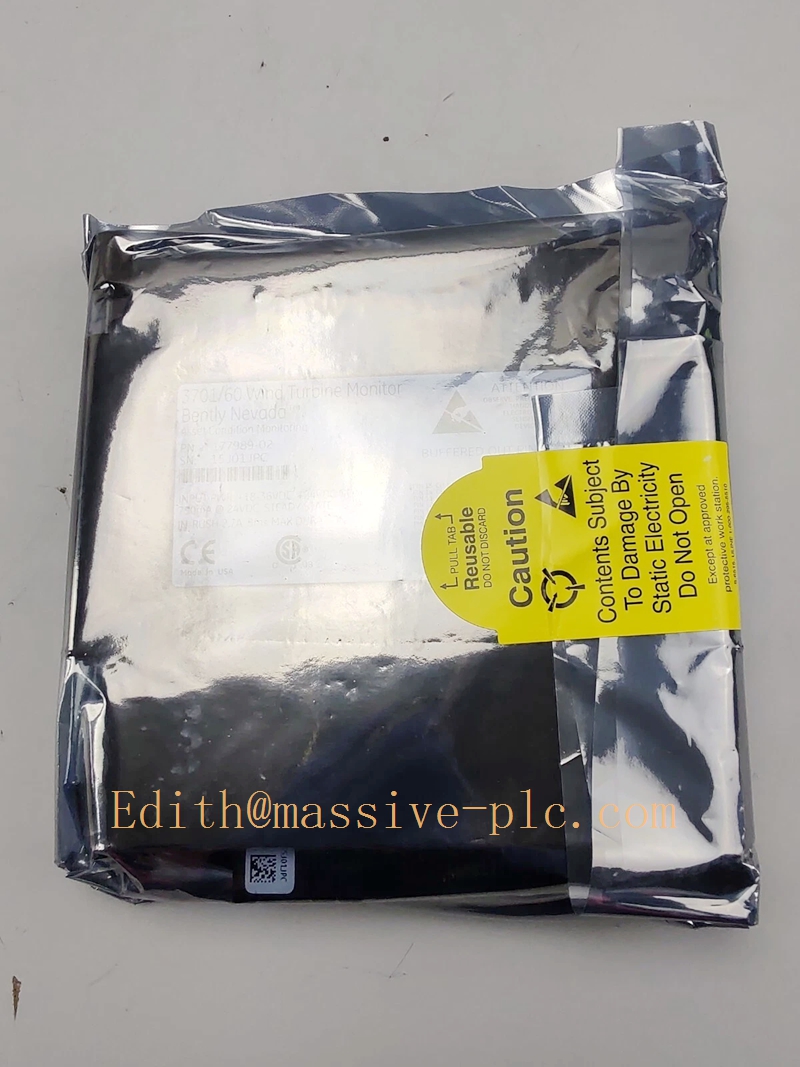
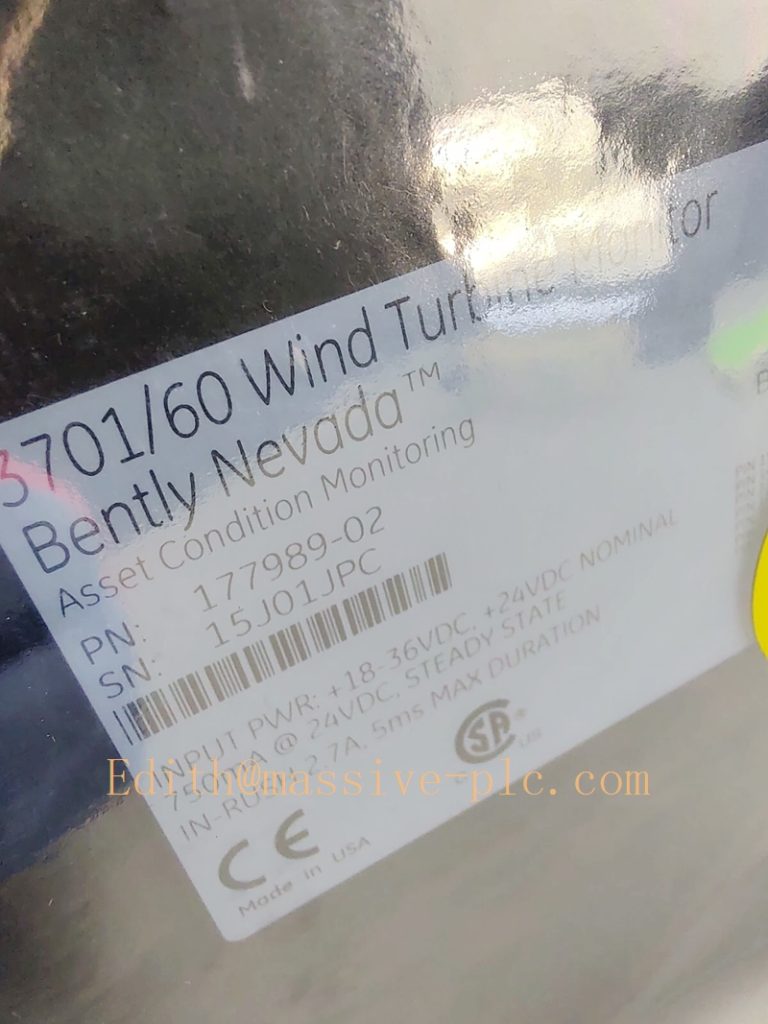
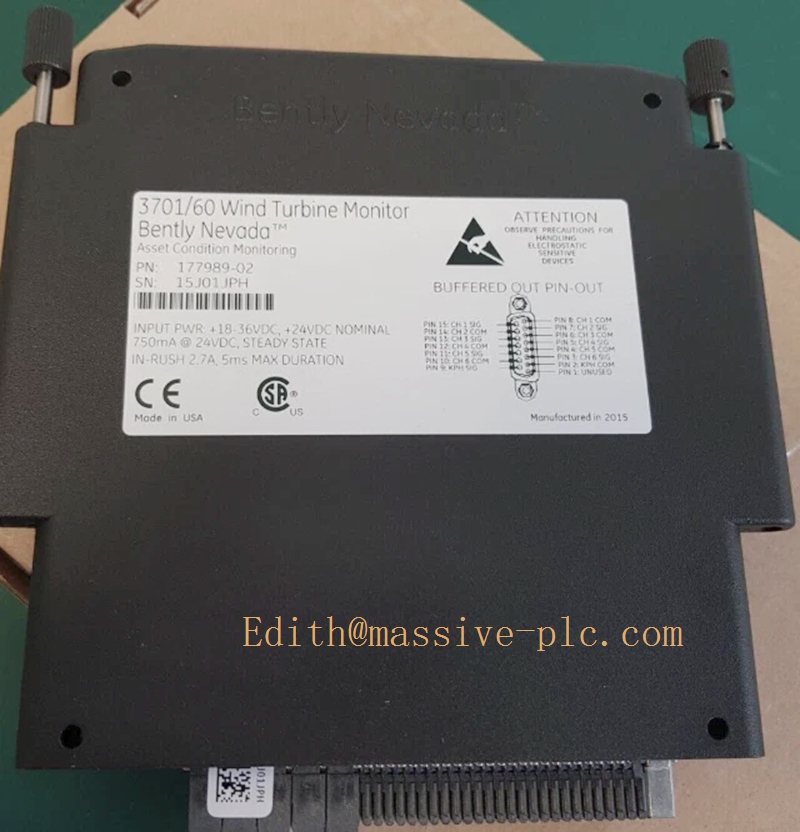
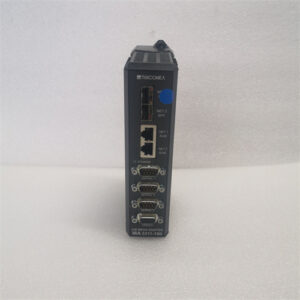
Bently Nevada 3701/60 (177989‑02) Wind Turbine Monitor
Model Introduction
Model: 3701/60 Wind Turbine Monitor Part Number: 3701/60, Hardware drawing number 177989‑02 Device Type: Compact stand‑alone condition monitoring unit of ADAPT‑3701 platform, specially developed for wind turbine drivetrain health monitoring Manufacturer: Bently Nevada (Baker Hughes)
System Compatibility: ‑ Independent monitoring unit, not belong to 3500 rack, not 1900‑series panel monitor. ‑ Successor upgrade model: 3701/60A; 177989‑02 is legacy hardware revision of 3701/60. ‑ Support IEPE accelerometer, proximity probe, 4‑20 mA analog input, speed/keyphasor signal. ‑ Configuration via ADAPT software; data upload via Modbus‑TCP / Modbus‑RTU to wind‑farm SCADA / Asset Manager system.
Application Scenarios: On‑shore & offshore wind turbine. Monitor gearbox, main bearing, generator bearing, low‑speed/high‑speed shaft. Real‑time vibration, temperature, speed monitoring; FFT spectrum, envelop analysis for early fault prediction (gear tooth damage, bearing spall). Support condition‑based maintenance instead of fixed‑interval overhaul. Country of Origin: United States Lifecycle Status: 3701/60(177989‑02) obsolete; successor 3701/60A active; only aftermarket surplus/refurbished for 177989‑02.
Important note: ‑ 3701/60 is condition monitoring CM unit, not safety trip ESD device. For overspeed & emergency shutdown, select 3701/55 TMR‑ESD module. ‑ 177989‑02 = hardware drawing number for 3701/60, ordering model name keeps 3701/60. Do not mix‑up with upgraded 3701/60A.
Bently Nevada 177989-02 370160
Technical Introduction
Core Functions
‑ Multi‑channel vibration acquisition: IEPE accelerometer, proximity displacement probe, speed / keyphasor input. ‑ 24‑bit high‑resolution A/D sampling, support FFT spectrum, envelop analysis, time‑waveform recording for wind turbine variable‑speed working condition. ‑ Multi‑channel 4‑20 mA analog input for temperature, pressure and other auxiliary process signals. ‑ User‑configurable Alert / Danger alarm thresholds, alarm delay, transducer fault detection (open / short circuit). ‑ Internal large‑capacity historical data & event log storage; export fault waveform for post‑failure analysis. ‑ Dual‑Ethernet + RS485 interface; Modbus TCP / Modbus RTU communication for wind farm SCADA integration. ‑ Rugged reinforced enclosure, adapt to nacelle high‑vibration, wide temperature wind‑turbine cabin environment. ‑ Configuration & diagnosis by ADAPT PC software via USB service port.
Key Technical Specifications
| Item | Parameter |
|---|---|
| Supported sensors | IEPE accelerometer, proximity probe, speed/keyphasor, 4‑20 mA transmitter |
| Sampling resolution | 24‑bit A/D converter |
| Max sampling frequency | 60 kHz |
| Communication | Dual Ethernet(Modbus‑TCP), RS485(Modbus‑RTU), USB service port |
| Power supply | 18‑36 VDC |
| Power consumption | ≤20 W |
| Operating temperature | ‑40 ℃ ~ +70 ℃ (nacelle harsh environment) |
| Storage temperature | ‑45 ℃ ~ +85 ℃ |
| Humidity | 0‑95 % non‑condensing |
| Anti‑vibration | 5g (10‑500 Hz); anti‑shock 15g/11ms |
| Weight | ~4.3 kg |
| Compliance | CE, UL, suitable for wind‑power nacelle installation |
Mechanical Feature
Compact metal reinforced enclosure, wall‑mount / cabinet‑mount installation inside wind turbine nacelle. Rear side terminal blocks for sensor, power supply and communication wiring. USB service port on front panel. Not hot‑swappable; power‑off unit before modifying field wiring.
Bently Nevada 177989-02 370160
Adaptive Quality Assurance & Test Protocol
3.1 Factory Adaptive QA Procedure
- Power‑on self‑diagnostic full‑unit verification.
- Vibration/speed signal injection test, verify sampling accuracy, FFT & envelop analysis function.
- 4‑20 mA analog input channel accuracy test.
- Alarm threshold, delay and transducer fault simulation test (open / short circuit).
- Historical waveform & event log recording verification.
- Modbus‑TCP / RTU communication interoperability test.
- Environmental screening: wide‑range temperature cycling, vibration & shock test, EMC noise immunity test.
- Serial‑number & drawing number(177989‑02) traceability, full functional‑test report archived.
3.2 On‑site Acceptance Test Protocol
- Visual inspection: Check unit housing, terminal blocks, connectors without mechanical damage. Confirm hardware drawing number 177989‑02.
- Wiring check: Accelerometer / probe sensors, 24VDC power, speed signal, Modbus communication cable.
- Power‑on test, confirm self‑test completes without hardware fault.
- Connect PC by USB, download site configuration project via ADAPT software; set channel parameters, alarm thresholds, working‑condition trigger rules.
- Inject simulated vibration / speed / analog signal; verify measurement reading, alarm trigger and event log record.
- Cross‑check data consistency between local unit and wind‑farm SCADA via Modbus.
- Simulate sensor open‑circuit / short‑circuit fault, verify fault alarm response.
- Record part‑number, hardware drawing‑no 177989‑02, firmware‑version and project file backup for site QA archive.
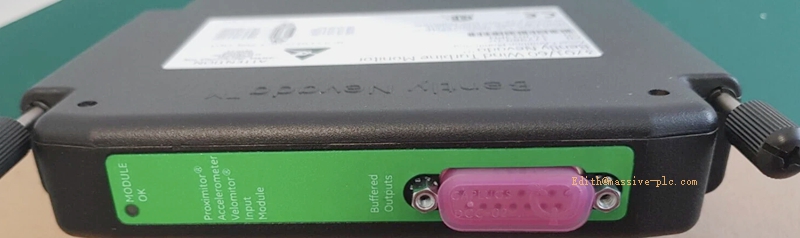
Bently Nevada 177989-02 370160
Field Engineer Technical Notes
Installation Guidance
‑ Install inside wind turbine nacelle cabinet; avoid direct solar radiation; keep ventilation. ‑ Vibration sensor cables must be shielded, separate from high‑voltage frequency‑converter power cables to reduce EMI interference. Single‑end shielding grounding. ‑ 3701/60 (177989‑02) is legacy hardware. When purchasing spare parts, distinguish from upgraded 3701/60A, firmware and hardware are not fully interchangeable. ‑ This unit is for condition monitoring only; it cannot execute safety overspeed trip function. If overspeed protection required, add 3701/55 TMR‑ESD system.
Field note: Many old wind‑farm sites are equipped with 3701/60‑177989‑02. For new‑build projects, factory recommends 3701/60A successor model.
Commissioning Tips
‑ All channel setup, spectrum parameters, alarm logic are completed in ADAPT configuration software and downloaded to unit. Keep backup of project source file. ‑ Configure operating‑condition trigger (wind speed, generator power) for variable‑speed wind turbine, avoid false alarm under variable rotating speed. ‑ Cross‑validate: unit local reading shall be consistent with SCADA Modbus remote reading.
Troubleshooting Common Issues
- Unit no power: Check 18‑36 VDC power supply and rear‑terminal connection.
- Channel sensor fault: Check accelerometer/probe cable for open‑circuit / short‑circuit, sensor power supply.
- Modbus communication loss: Check Ethernet / RS485 wiring, slave address, baud‑rate, termination resistor.
Diagnostic: Read unit event log and waveform data by ADAPT software for detailed fault analysis.
Maintenance & Spare‑part Recommendation
‑ No field‑serviceable internal components; replace complete unit upon hardware failure. ‑ Spare‑part suggestion: For legacy turbines with 177989‑02, confirm hardware revision before ordering spare unit; or upgrade to 3701/60A. ‑ Preventive inspection during turbine shutdown: Check mounting fixing screw tightness, terminal torque, cable shielding integrity.
ADAPT‑3701 platform product comparison table
| Part Number | Drawing No. | Product name | Core function |
|---|---|---|---|
| 3701/55 | ‑ | ADAPT‑ESD TMR Processing Module | Triple‑redundant overspeed & emergency safety shutdown |
| 3701/60 | 177989‑02 | Wind Turbine Monitor (legacy) | Wind‑turbine drivetrain condition monitoring |
| 3701/60A | ‑ | Wind Turbine Monitor (upgrade) | New‑generation wind‑turbine condition monitor |

 Start Chat