
Description
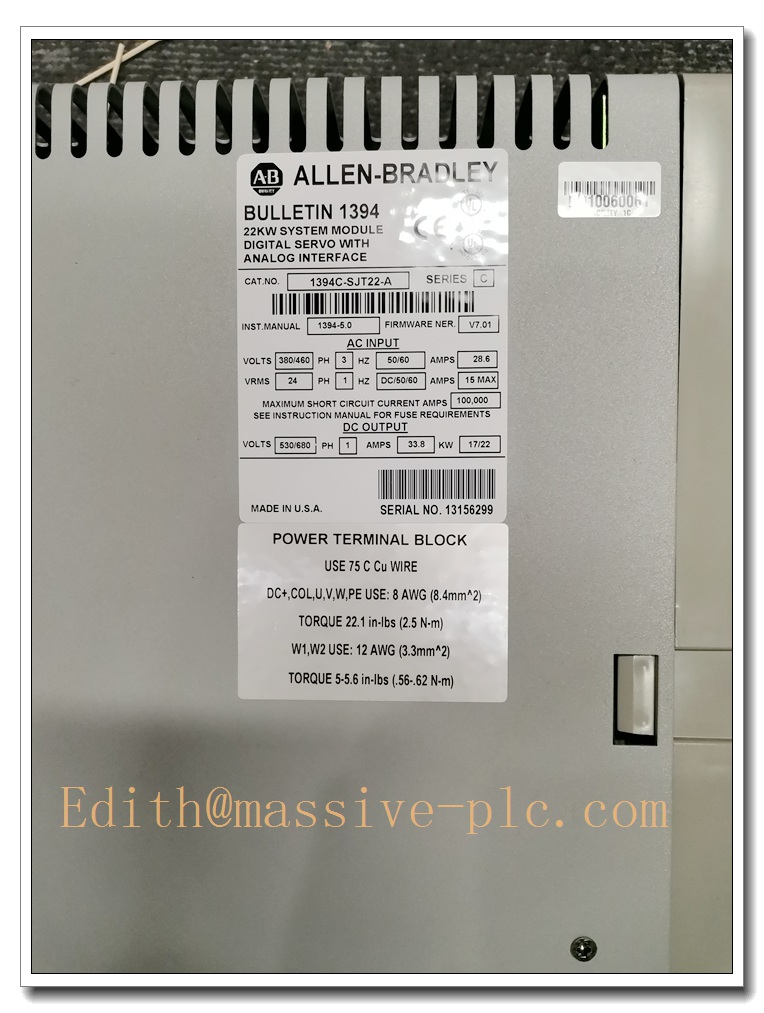
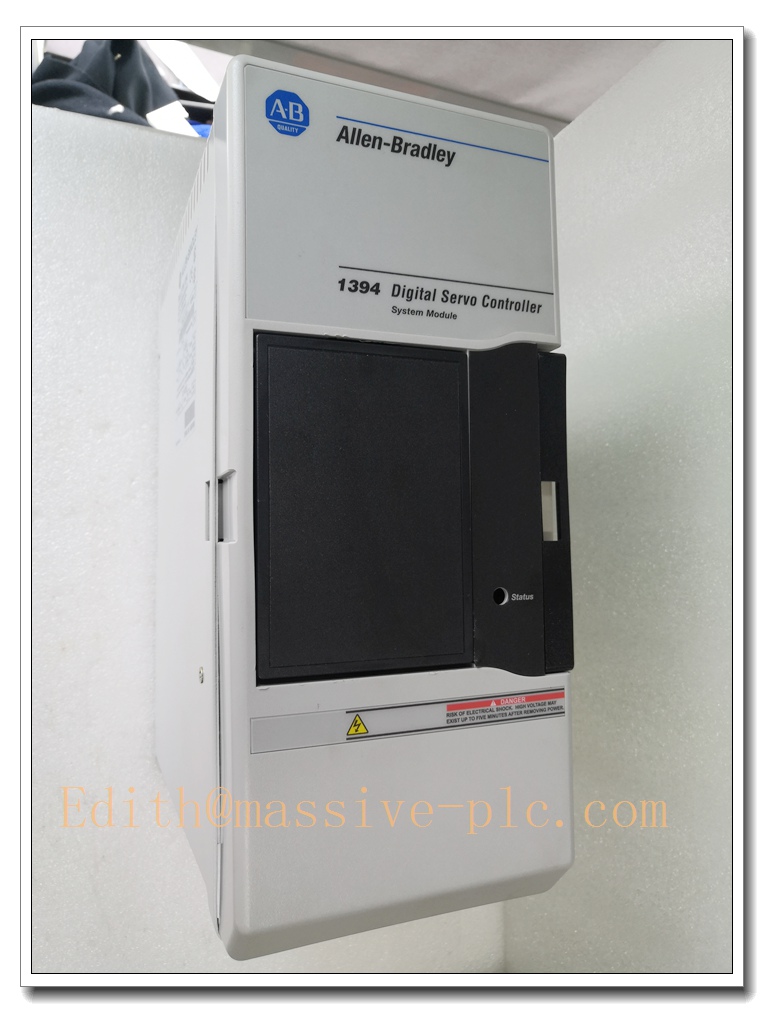
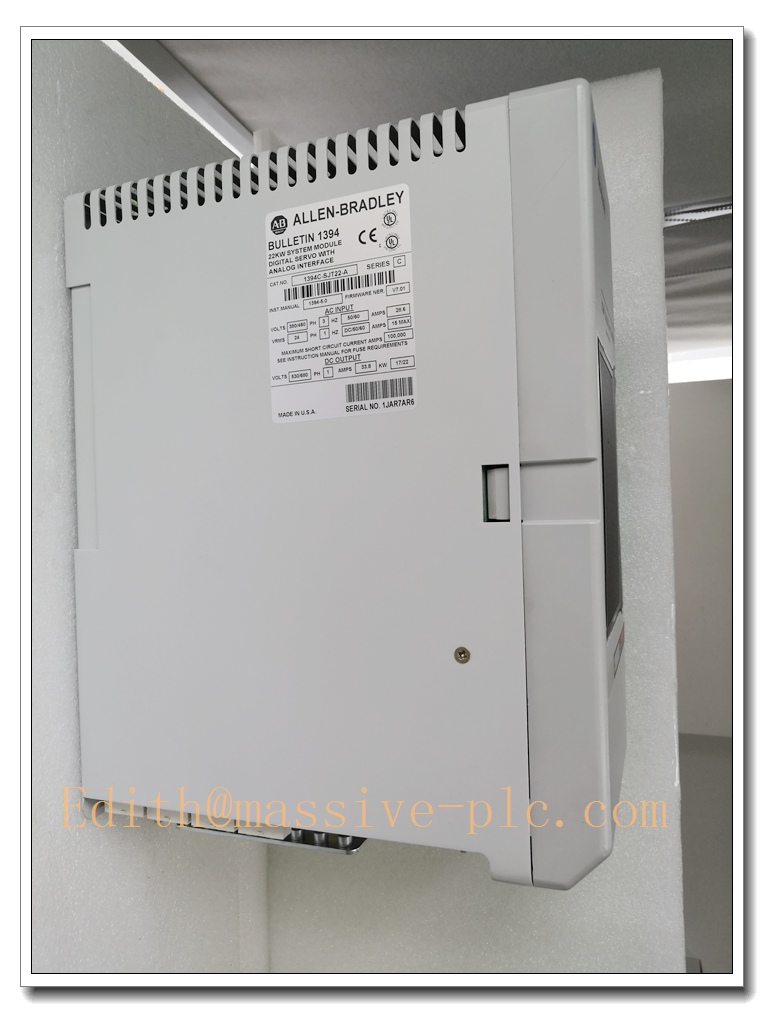
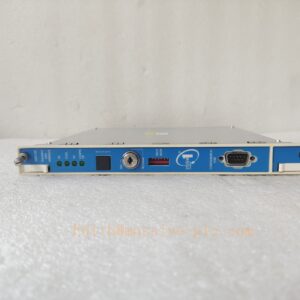
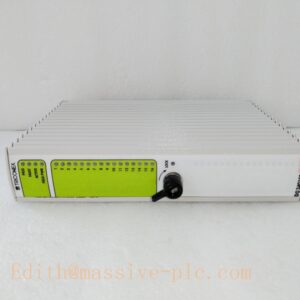
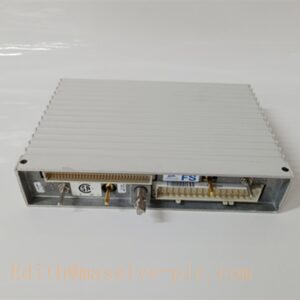
Allen‑Bradley (Rockwell Automation) 1394C‑SJT22-A 22kW Digital Servo System Module, Bulletin 1394 GMC Series
Product Core Introduction
The 1394C-SJT22-A is a high-performance integrated digital servo system module from Rockwell Automation Allen‑Bradley Bulletin 1394 GMC (Generic Motion Control) family. Rated at 22kW, this Series C unit integrates power stage, motion controller, EMI filter, smart power management and termination circuitry in a single rack-mount enclosure. It executes multi-axis coordinated motion control, accepts ±10V analog command signals and quadrature encoder feedback, delivering high-precision position, velocity and torque regulation for heavy-duty servo motors. Designed for machine-level synchronized motion, it supports GML programming for custom motion sequences. This model is officially end-of-life by Rockwell; available supply consists of fully tested refurbished and surplus spare units for legacy machine retrofits and maintenance.
Main Technical Specifications
| Technical Parameter | Specification Value |
|---|---|
| Model | 1394C-SJT22-A (Allen‑Bradley / Rockwell Automation) |
| Series | Bulletin 1394 GMC Series C |
| Rated Output Power | 22 kW |
| AC Input Voltage | 360–480 VAC, 3-phase, 50/60 Hz |
| DC Bus Voltage | 530–680 VDC |
| Control Processor | 32-bit motion CPU, 64KB program memory |
| Command Interface | ±10 VDC analog input |
| Encoder Feedback | Quadrature incremental AB encoder input |
| Axis Support | Multi-axis coordinated motion, GML motion programming |
| Built-in Features | EMI filter, smart power protection, integrated termination |
| Protection Functions | Overvoltage, undervoltage, overcurrent, over-temperature, motor stall, emergency stop |
| Operating Temperature | 0 ℃ ~ +45 ℃ |
| Storage Temperature | -40 ℃ ~ +85 ℃ |
| Operating Humidity | 5% ~ 90% RH, non-condensing |
| Mounting | Panel / cabinet rack mount |
| Net Weight | 16.24 kg |
| Compliance | UL, CSA, CE |
| Lifecycle Status | OEM Discontinued, aftermarket tested spare |
Brand Same‑Series Model Recommendation
- 1394C-SJT05-A: 5kW compact GMC servo system, low power variant for small axes, suitable for pick-and-place and light automation.
- 1394C-SJT10-A: 10kW mid-range model, same Series C architecture, widely used for medium-load machine axes.
- 1394C-SJT22-T: Turbo version of 1394C-SJT22-A, enhanced high-speed motion processing, higher encoder frequency capability.
- 1394C-SJT30-A: 30kW high-power model for heavy gantry, large CNC and high inertia motion platforms.
- Kinetix 5500: Modern Rockwell replacement servo drive platform, recommended for long-term system migration away from legacy 1394 GMC.
Professional Quality Control Test Standard Operating Procedures (SOP)
5.1 Incoming & Visual Inspection
Inspect power semiconductors, control PCBs, bus capacitors, fans, terminal blocks and housing. Visual inspection checks for bulging capacitors, burnt traces, cracked solder, fan damage and connector deformation. Megger insulation test for power circuits, continuity check for safety interlock circuits. Retain batch traceability records.
5.2 Low-Voltage Power-On Pre-Test
Apply low control voltage first. Verify CPU boot, LED status, self-diagnostic routines, GML firmware load and communication handshake. Check for abnormal fan noise or thermal rise before applying high-voltage main power.
5.3 Powered Burn-in Test
72-hour cyclic burn-in at 40°C ambient. Run periodic load cycles with matched servo motor. Monitor DC bus stability, output current, temperature rise and fault logs. Units with intermittent trips, current drift or fan failure are rejected.
5.4 Full Performance Calibration & Functional Test
Use power analyzer, oscilloscope and encoder simulator to calibrate analog command gain, encoder feedback and closed-loop control response. Validate all protection trips: OV, UV, OC, overtemperature and E-stop interlock. Verify GML motion program execution, multi-axis synchronization and position accuracy.
5.5 Environmental Stress Screening
Temperature cycling (0 ℃ ↔ +45 ℃), humidity soak and low-level random vibration per IEC 60068 to validate mechanical integrity and power stage stability under simulated shipping and factory operating stress.
5.6 Final Acceptance Test
System-level test paired with compatible servo motor. Execute jog, positioning, velocity profiling and emergency stop test. Verify fault code reporting. Complete appearance, label and accessory inspection. Passed units are packed with anti-shock packaging.
New Module Installation Guidelines
6.1 Pre-Installation Preparation
- Lock-out/tag-out (LOTO) the 3-phase mains supply. Confirm DC bus capacitors are fully discharged.
- Wear anti-static wristband and gloves. Use anti-static mat for handling control boards.
- Inspect 1394C-SJT22-A for physical damage, capacitor swelling or bent terminals. Confirm motor and machine compatibility.
- Check cabinet cooling fan capacity, cable routing clearance and proper grounding plan.
6.2 Hardware Installation
- Mount the servo module securely on cabinet backpanel, torque mounting fasteners to specification. Maintain required side/top airflow clearance.
- Wire 3-phase AC input, DC bus, motor power cable, encoder feedback cable, analog command wiring and safety E-stop interlock strictly following Allen‑Bradley wiring diagram.
- Use shielded cables for encoder and analog signals; separate low-level control wiring from high-power motor cables.
- Verify protective earth grounding is solid and low impedance.
6.3 Post-Installation Commissioning
- Double-check wiring, grounding and interlock continuity before energizing.
- Apply control power first, run power-up self-test and review fault status codes.
- Power on 3-phase mains, configure motor parameters, run motor identification auto-tune.
- Execute low-speed jog test, verify encoder direction and position feedback. Tune servo position/velocity loops.
- Run full motion profile test and continuous 30–60 minute load test before releasing machine to production.
Important Safety Note: This unit contains high-voltage DC bus. Capacitors retain hazardous voltage after power removal. Only qualified automation technicians are permitted to perform installation and service.
1394C-SJT22-A
Application Scenarios & Product Characteristics
7.1 Application Scenarios
- CNC machine tools, multi-axis machining centers
- Automated gantry systems, heavy material handling
- Printing, converting and web processing machinery
- Packaging automation, large palletizing robots
- Semiconductor backend equipment, factory automation transfer lines
7.2 Key Characteristics
- Integrated GMC motion controller + power drive in single unit, reducing cabinet component count
- GML programming language for custom multi-axis synchronized motion profiles
- High torque dynamic response for heavy inertia loads
- Built-in EMI filter and smart power protection to suppress industrial noise
- Analog ±10V command interface for easy integration with legacy machine controllers
- Robust industrial cabinet design for continuous 24/7 factory operation
- Critical spare for legacy Rockwell 1394 GMC motion systems (OEM discontinued)
FAQ (Frequently Asked Questions)
Q1: Unit powers up but reports bus overvoltage fault. A1: Check 3-phase input voltage and line reactor. Inspect DC bus capacitor health. Verify regenerative energy handling, brake resistor connection and motor deceleration ramp settings.
Q2: Position drift or jitter occurs during motion. A2: Check encoder cable shielding, grounding and connector integrity. Verify encoder wiring polarity. Re-tune servo loops. Check for mechanical backlash or coupling play on the axis.
Q3: Drive trips overcurrent during acceleration. A3: Confirm motor nameplate parameters match drive configuration. Inspect motor winding insulation and cable short circuit. Reduce acceleration rate or check for mechanical binding in the axis.
Q4: GML program fails to download or communication drops. A4: Check serial/communication cable, connector pins and shielding. Verify firmware revision compatibility between controller and programming software. Reset controller and re-download project.
Q5: Can I directly replace 1394C-SJT22-A with 1394C-SJT22-T? A5: Mechanical footprint is compatible, but firmware and motion timing differ. GML programs and servo tuning parameters require revalidation after swap.
Q6: Hot swap allowed? A6: NOT PERMITTED. Cut off all 3-phase power and fully discharge DC bus before opening enclosure or removing the unit.

 Start Chat