Description
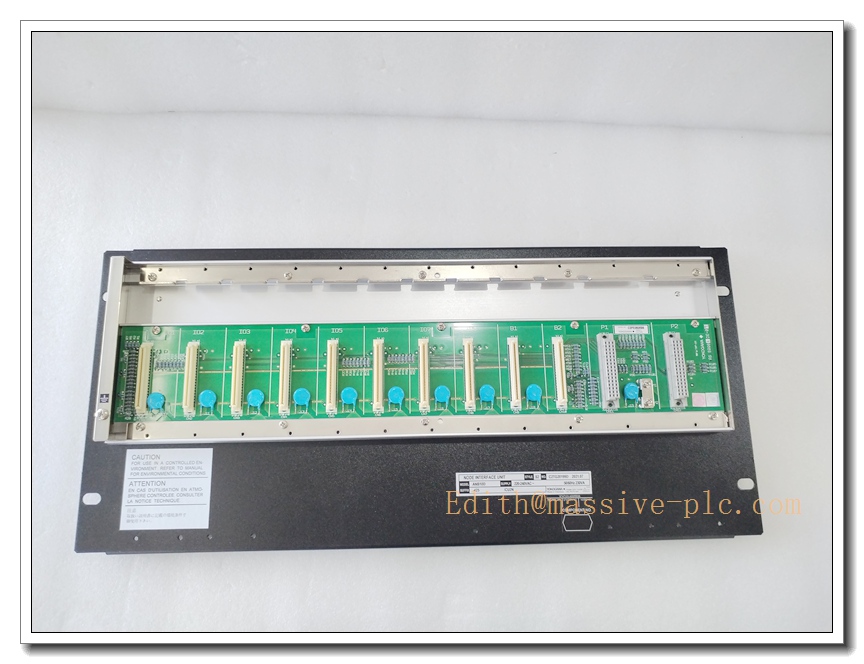
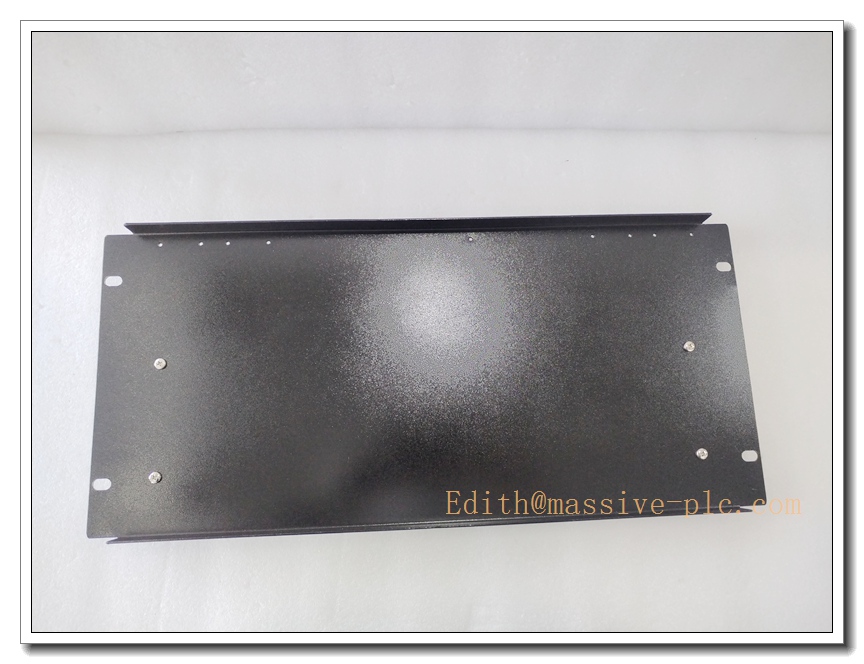
Yokogawa ANB10D-425/CU2N Dual-Redundant ESB Bus Node Unit
Product Overview
The Yokogawa ANB10D-425/CU2N is a high-reliability dual-redundant ESB bus node unit purpose-built for the CENTUM VP distributed control system (DCS) platform, serving as the critical high-speed data bridge between Field Control Units (FCUs) and distributed FIO field I/O modules. Equipped with the CU2N enhanced bus connector unit and full dual-redundant architecture covering communication channels and power supplies, it delivers sub-millisecond deterministic data transmission, zero-disturbance fault switchover, and ISA G3 grade enhanced environmental tolerance. This unit has become the standard deployment choice for large-scale process industries including petrochemical refining, combined-cycle power generation and LNG terminal facilities, ensuring uninterrupted data flow for 24/7 continuous production operations.
Technical Specifications
| Parameter Category | Detailed Specification |
|---|---|
| Manufacturer | Yokogawa Electric Corporation |
| Product Type | Dual-Redundant ESB Bus Node Unit for CENTUM VP DCS |
| Bus Protocol | Yokogawa dedicated ESB high-speed industrial bus, 128Mbps full-duplex transmission rate |
| Redundancy Mechanism | Full dual-redundant design for both communication channels and power supplies, fault switchover completed within 50ms with zero data loss |
| Supported FCU Capacity | Maximum 13 ANB10D-425/CU2N units can be connected to a single AFV30/AFV40 field control unit |
| Power Supply Options | 100–120V AC 50/60Hz, 220–240V AC 50/60Hz, or 24V DC 5.5A |
| Power Consumption | 230 VA / 120 W (under 220–240V AC operating condition) |
| Operating Temperature Range | -20°C to +60°C (ISA G3 enhanced variant extends to -20°C to +70°C) |
| Storage Temperature Range | -40°C to +70°C |
| Physical Dimensions | 482.6mm × 221.5mm × 150.6mm, net weight approximately 10kg |
| Installation Standard | 19-inch standard industrial rack mounting, secured with M5 insulated screws |
| Protection Rating | IP20 for indoor cabinet installation |
| System Compatibility | Fully compatible with CENTUM VP R6.0 and later system versions, supports ProSafe-RS safety instrumented system integration |
| Safety Certifications | CE, RoHS, UL, cUL global industrial safety compliance certifications |
8 Recommended Related Yokogawa Models
- ANB10D-425/CU2T – Enhanced temperature-rated ESB bus node unit, optimized for extreme high-temperature industrial site control cabinet environments
- ANB10D-415/CU2N – Standard single-redundancy ESB bus node unit, cost-effective for non-critical auxiliary control loops
- EC401 S3 – ESB bus coupler module, mandatory hardware to enable long-distance extended ESB bus fiber-optic transmission
- PW482-10 – Dedicated dual-redundant power supply module, providing stable filtered power for ANB10D-425/CU2N and connected I/O modules
- AFV30D – CENTUM VP field control unit, the core master station that establishes ESB bus communication with ANB10D-425/
- AIV501 – High-density 16-channel analog input FIO module, seamlessly mounted on / backplane for process signal acquisition
- ADV551 – 32-channel digital output FIO module, directly powered and managed by / for on-site interlock control
- CENTUM VP Engineering Software Suite – Official Yokogawa configuration tool for full bus network diagnosis, parameter setup and real-time status monitoring
Compatibility Notes & Critical Installation Pitfalls
- System Version Validation: / cannot operate normally on CENTUM VP versions earlier than R6.0; missing required system patches will trigger repeated bus communication failures
- Backplane Hardware Matching: The unit only fits dedicated ANB10D series FIO backplanes; attempting to insert it into legacy ANB100 or other series backplanes will permanently damage the ESB bus circuit
- Forbidden Non-Standard Hot-Swap: Hot-swap replacement is only permitted under dual-redundant bus configuration; removing the single running / without prior switchover will cause complete FIO station communication outage
- Cable Specification Mandatory: Ordinary commercial Ethernet cables cannot be used for ESB bus connections; only Yokogawa-certified shielded industrial cables guarantee <1μs network jitter under full 13-node load
- Grounding Isolation Requirement: The unit chassis grounding terminal must be connected to the independent DCS dedicated grounding grid, strictly forbidden to share grounding with high-power frequency converters to avoid EMC interference-induced random bus disconnections
- Node Quantity Limit: Never connect more than 13 / units to a single AFV30/AFV40 FCU; exceeding the maximum capacity will cause bus bandwidth overload and periodic data loss
Standard Operating Procedure
- Pre-operation preparation: Fully back up the entire DCS project configuration and bus network parameters via the engineering station, confirm the target CENTUM VP system version and verify all required patches are pre-installed
- Redundancy status check: Confirm the standby ESB bus channel is in normal running state, manually switch all FIO communication traffic to the standby channel, verify all process data transmission remains stable without disturbance
- Faulty unit removal: Unlock the front panel mounting latch, pull the faulty / smoothly out of the 19-inch rack, avoid scratching the backplane gold pin connectors during operation
- New unit configuration: Verify the new / part number and suffix code, confirm the bus connector unit is pre-installed and no physical damage exists on all interface terminals
- Installation and power-on: Insert the new unit into the empty rack slot, push it firmly until fully seated and lock the mounting latch; the unit will automatically complete power-on self-test and synchronize full bus configuration data from the FCU
- Communication validation: Confirm the RUN LED indicator stays solid green, the BUS STATUS LED shows normal dual-channel healthy state, and the system bus management interface displays all connected FIO modules online
- Function verification: Perform full loop test for 10% of critical process points, validate that all analog signal acquisition, digital interlock output and field device communication functions operate completely normally
- Final documentation: Update the equipment maintenance log with the new unit serial number and firmware version, create a new full project backup and store it in two independent offline storage locations
Typical Application Scenarios
- Large-scale petrochemical refining and chemical integrated production facilities, connecting hundreds of FIO modules for distributed process signal acquisition and control
- 9F-class gas-steam combined cycle power plants, delivering high-reliability data transmission for turbine control and boiler protection interlock systems
- LNG receiving station terminal facilities, supporting long-distance bus communication across multi-kilometer distributed tank farm valve and level monitoring points
- Coal chemical and coal-to-olefin industrial plants, ensuring uninterrupted data flow for high-risk reactor safety interlock control loops
- GMP-compliant pharmaceutical API manufacturing workshops, meeting strict regulatory requirements for full process data traceability and communication redundancy
- Large-scale municipal and industrial wastewater treatment plants, managing distributed I/O points across multiple geographically separated processing units
Recommended Supporting Components
- Yokogawa CENTUM VP engineering station software, providing full bus network configuration, online debugging and system diagnostic functions
- Certified ESB bus shielded industrial communication cables, ensuring deterministic low-jitter communication between / and FCU
- Original dedicated 19-inch standard industrial rack mounting accessories, guaranteeing reliable physical connection and heat dissipation for the unit
- PW482-10 redundant power supply modules, eliminating single-point power failure risk for the entire / station
- Industrial-grade ESD anti-static operation kit, protecting the unit mainboard PCB from electrostatic damage during maintenance
- EC401 S3 ESB bus coupler module, enabling long-distance fiber-optic extended transmission for distributed FIO station deployment across large plant areas