Description
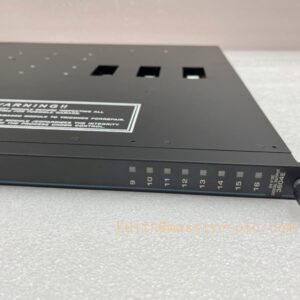
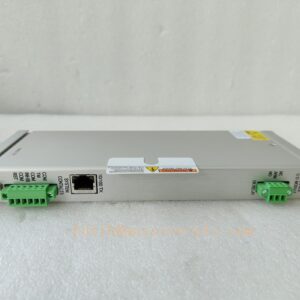
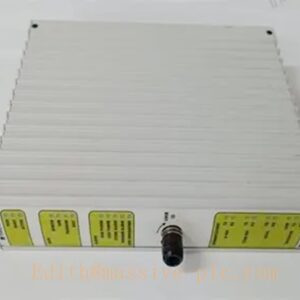
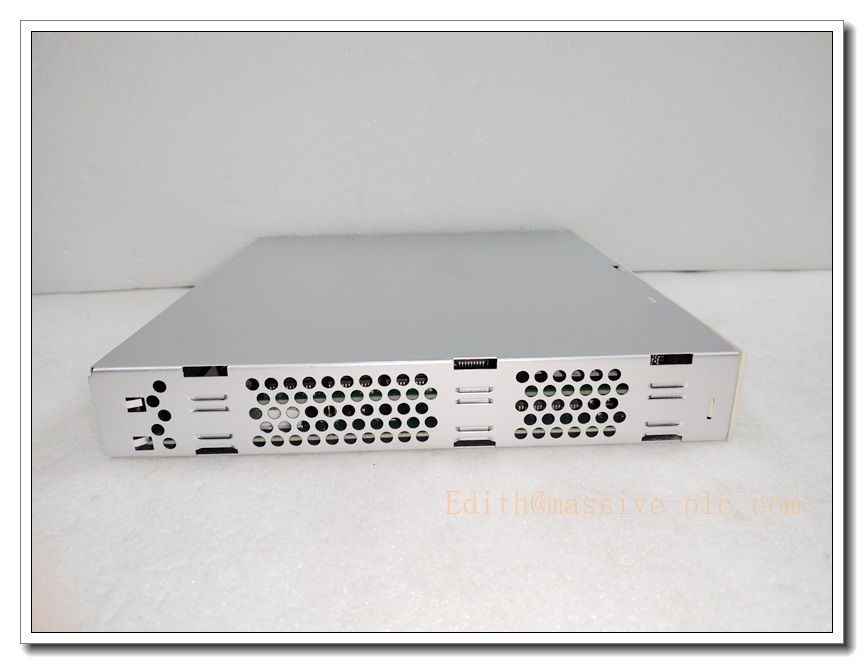
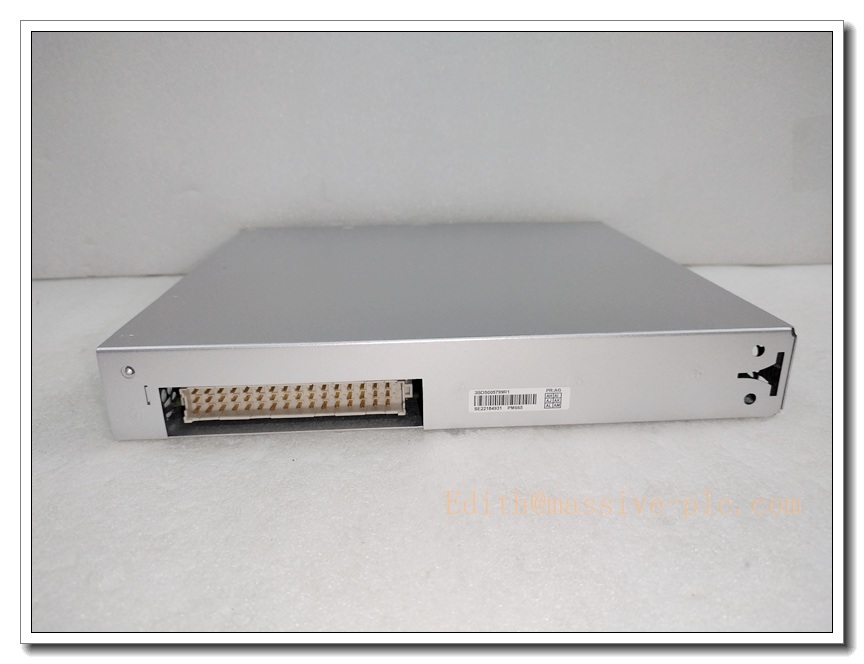
ABB PM665 — Advant Controller 160 (AC 160) PowerPC Processor Module, Order No. 3BDS005799R1
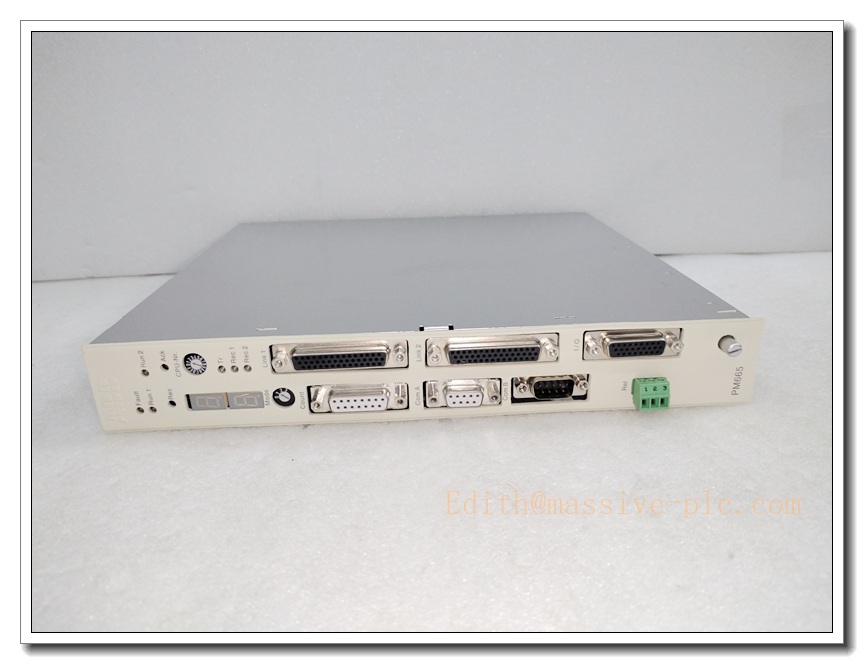
ABB PM665 3BDS005799R1
Brand & Model Title
ABB PM665 (3BDS005799R1) — Advant Controller 160 Processor Module, PowerPC (Motorola MPC8240), Redundancy-Capable, for Turbine Control & Fast Closed-Loop Applications in the Advant Master / System 800xA Environment
The PM665 is the high-performance CPU module of the ABB Advant Controller 160 (AC 160) — the controller ABB built specifically for turbine control and protection (gas, steam and hydro), introduced from the AC 160 platform’s 1997 generation and widely deployed in combined-cycle power stations delivered by Alstom and the former ABB Stal (now Siemens Industrial Turbomachinery). ABB’s own product page describes it as the “PowerPC based Processor Module PM665 with outstanding performance,” sitting in the AC 160 controller subrack (RF616) alongside S600 central and S800 distributed I/O, communicating over Advant Fieldbus 100 (AF100), PROFIBUS-DP, Modbus, RCOM/RCOM+ and Siemens 3964R, and fully integrable into System 800xA. The PM665 is not an AC 800M CPU and not an AC 450 processor — a distinction that causes most of the wrong-part orders on this reference.
Main Technical Specifications (ABB official AC 160 data + module documentation)
| Parameter | Value |
|---|---|
| Product type | Processor module / controller CPU (backplane plug-in) |
| Platform | ABB Advant Controller 160 (AC 160), Advant Master DCS; integrable into System 800xA |
| Order number | 3BDS005799R1 (must match exactly — no cross-series substitution) |
| Processor | Motorola MPC8240 PowerPC architecture |
| Host rack | RF616 controller subrack; processor modules in positions 3–8 of the basic subrack |
| Multi-processing | Up to 6 processor modules per controller |
| Redundancy | Scalable redundancy — processor modules (1:1 hot standby with hardware voter), I/O bus extension, AF100 bus, and power supply |
| I/O capacity | Max ~1,500 I/O signals; max 75 S600 I/O modules; 1 basic unit, 2 subracks per basic unit, 7 S600 I/O stations; up to 32 S800 I/O stations on AF100 (24 modules per station) |
| Fieldbus / comms | Advant Fieldbus 100 via CI630/CI631 (up to 8 interfaces when redundant); PROFIBUS-DP via PM644; Modbus (CI532V02); RCOM/RCOM+ (CI532V01); Siemens 3964R (CI532V03); SERCOS (ordered directly from ABB Schweiz) |
| Engineering interface | On-board EIA-232 / RS-232 serial port for program download, diagnostics and backup |
| Functions | Continuous closed-loop control (CLC), logic and sequence control, regulatory/supervisory control, positioning, calculations and process optimization, alarm/event recording with at-the-source time-tagged sequence of events (SoE) |
| Supply | Rack-supplied via the controller backplane (BIOB — backplane I/O bus); verify per nameplate and AC 160 system manual |
| Dimensions / weight | ~252 × 273 × 40 mm; ~2.0 kg (supplier-reported) |
| Lifecycle | EOL — no new production; supplied as new-surplus, pull-out or third-party repaired stock |
Typical Applications
- Steam, gas and hydro turbine control and protection — the reference application of AC 160; fast closed-loop governing, valve positioning and trip logic
- Combined-cycle and cogeneration plants — Alstom and former ABB Stal turbine packages with AC 160 controllers
- Boiler and balance-of-plant control — regulatory and sequence control with SoE recording for post-trip analysis
- Redundant high-availability control nodes — 1:1 processor redundancy with redundant AF100 and power supply for continuous-process plants
- Legacy fleet life extension — replacing a failed CPU to restore an AC 160 rack without forcing premature platform migration; AC 160 remains under ABB’s “support and migration” service program with an evolution path to AC 800M/800xA
Related News & Events
- Lifecycle status: the PM665 is EOL with no new production; ABB’s Advant Master service organization continues support, spares, repair and migration services, while the hardware itself is available only through new-surplus, decommissioned-plant and repaired channels. ABB’s documented evolution path for AC 160 is toward the AC 800M controller and System 800xA (800xA for AC 100/AC 160 integration, Control Builder A, AC 160 OPC Server remain in active lifecycle).
- Misidentification epidemic: this reference is routinely mislabelled as an AC 800M CPU (“163 MHz, 32 MB SDRAM, dual RJ45, TP830 baseplate, Control Builder M”) and as an AC 400-series module. Both are wrong. AC 160 uses the MPC8240 PowerPC; AC 450 uses 68040-class hardware; AC 800M CPUs are PM851/856/864/866 with completely different racks and firmware. The host rack model decides: RF616 = AC 160.
- Redundancy discipline: a redundant pair must be same model, same firmware revision — mixed revisions typically produce DUAL-LED faults and refused switchover. Many “DOA” legacy CPUs are in fact revision mismatches, not dead boards.
- Engineering-access caveat: programming and diagnostics run over the module’s EIA-232 serial port, not Ethernet — the correct serial cable, port settings and Control Builder A version must be confirmed before commissioning (a recurring field failure is arriving without the right serial driver/cable).
- Security/obsolescence context: AC 160 engineering environments historically ran on Windows XP/Server 2003-era platforms; ABB has published guidance on obsolete-OS exposure, and plants should isolate engineering stations and apply network segmentation.