Description
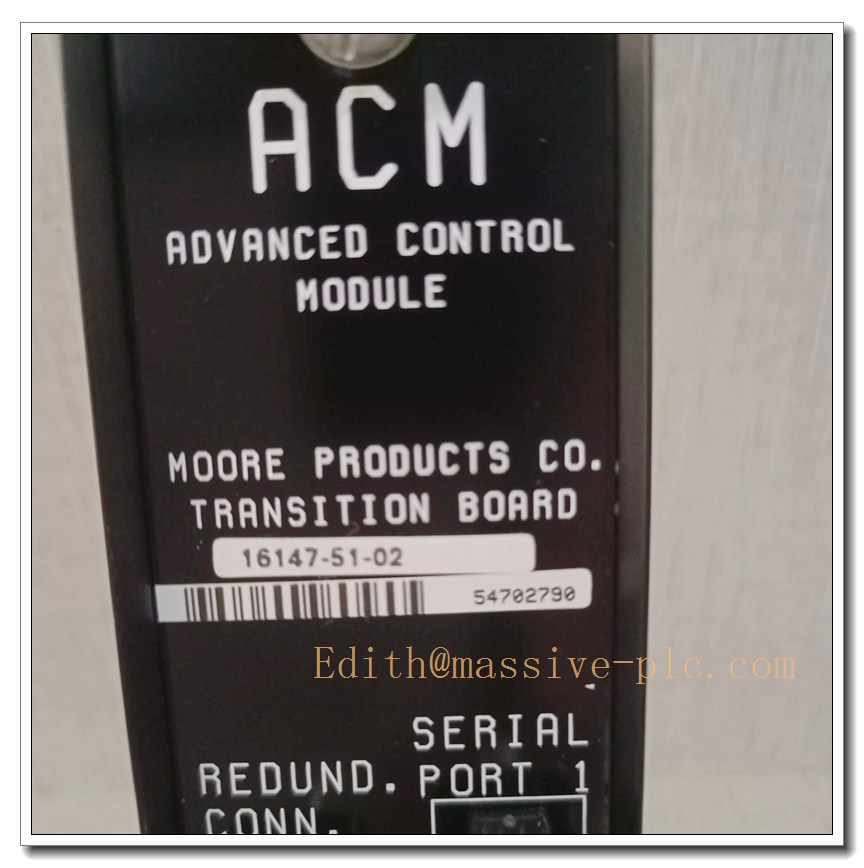
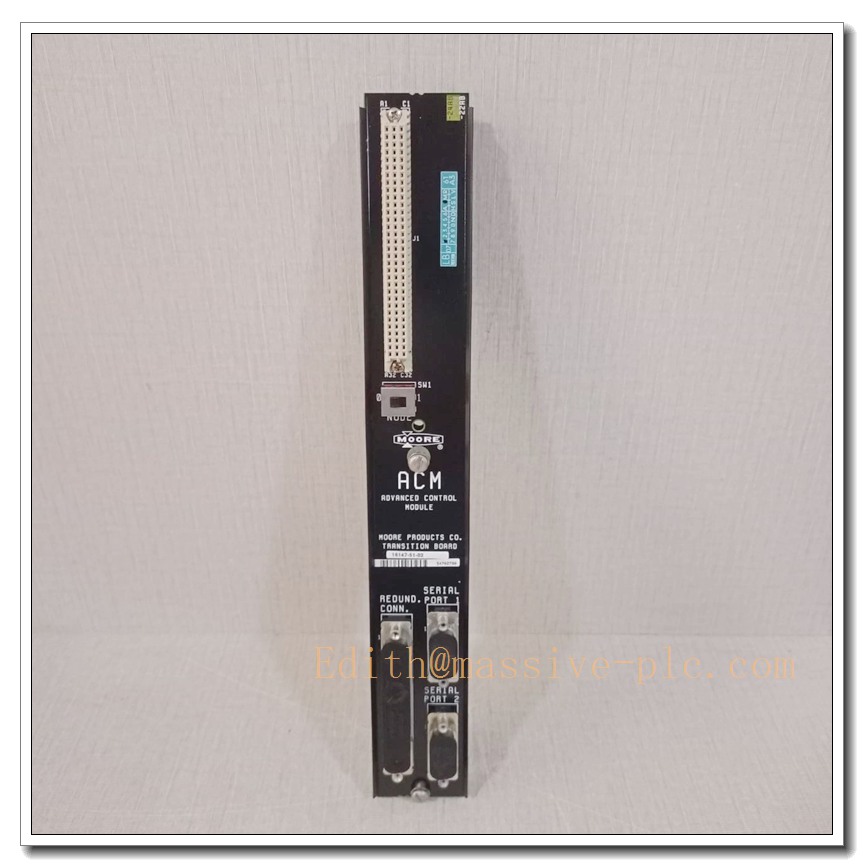
SIEMENS MOORE 16147-51-02 — APACS+ / QUADLOG ACM Transition Board, Revision 02, Advanced Control Module Interface Board
16147-51-02
Brand & Model Title
Siemens Moore (Moore Products Co. heritage) 16147-51-02 — APACS+ / QUADLOG ACM Transition Board, Rev. -02, Rear Interface Board Carrying the Advanced Control Module’s Bus and Redundant Serial Connections
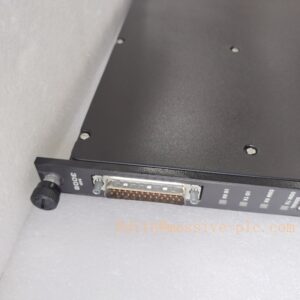
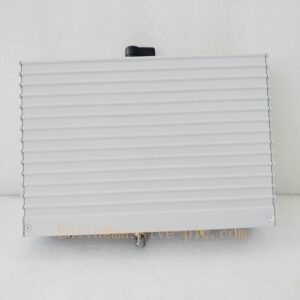
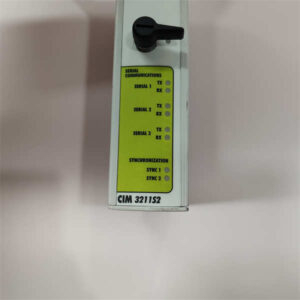
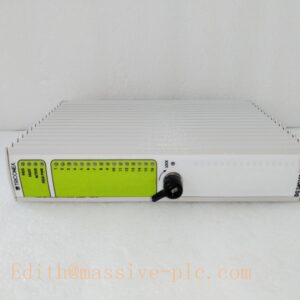
The 16147-51-02 is a printed-circuit transition board, not a controller and not an I/O module. The OEM catalogue description is the terse “APACS+/QUADLOG ACM TRANSITION BOARD” . It is the board that sits with the ACM (Advanced Control Module) in the MODULERAC assembly and forms the electrical and mechanical interface between the ACM’s edge connector and the rack’s bus wiring — carrying the Module Bus connections and bringing out the ACM’s serial ports on redundant connectors to the rear of the assembly.
The suffix logic matters more than usual here. Installed APACS+ plants hold 16147-21-2, 16147-51-1 and 16147-51-2 side by side, so the base number identifies the board type and the final digit is the revision. “-2” and “-02” are the same revision written two ways — one reseller’s claim that “16147-51-02 is the replacement model for 16147-51-2” is a separator artefact, not a supersession.
Main Technical Specifications
| Parameter | Value (verified) / (reported, unverified) |
|---|---|
| Product type | ACM transition / interface board (passive interconnect and mounting interface) |
| Platform | Moore APACS+, QUADLOG |
| Catalogue description | “APACS+/QUADLOG ACM TRANSITION BOARD” |
| Base part / revision | 16147-51 / -02 (equivalently “-2”) |
| Sibling revisions in the field | 16147-51-1 · 16147-21-2 (different ACM transition board type) |
| Function | Interface between the ACM edge connector and the rack bus; mechanical datum and support for the ACM; brings the ACM’s redundant serial ports to the rear |
| Connectors | Board-to-ACM edge/pin connector plus rear serial outlets on redundant connectors |
| Physical (reported) | ≈ 280 mm × 40 mm × 35 mm, ≈ 280 g (reseller warehouse note) |
| Mounting | Rack / control chassis mounted, within the MODULERAC assembly |
| Lifecycle | Discontinued legacy product; available as surplus in comparatively good quantity |
| Availability | 40+ units at one European reseller, 20+ at another (2026) — one of the better-stocked APACS+ spares |
The physical dimensions above are the only internally consistent set found. Market listings variously claim 76 × 51 × 20 mm, 125 × 54 × 10 mm, 220 × 180 × 30 mm, 310 × 130 × 60 mm and weights from 100 g to 1.5 kg — a spread that is itself proof the descriptions are generated rather than sourced.
Typical Applications
- ACM replacement and refurbishment — when an Advanced Control Module is exchanged, the transition board is normally carried over to the new module; a damaged board is the reason a “known-good” ACM fails to come up in a rack
- Rack rebuilds and MODULERAC change-outs — re-populating a chassis after mechanical damage, corrosion or a cabinet re-arrangement
- Repair of intermittent ACM faults — cracked solder joints at the edge connector, oxidised pins and worn serial connectors are the classic failure modes on a board that has been reseated many times
- Redundancy-path restoration — the rear serial outlets are where the ACM redundancy and station links land, so a damaged board shows up as partner-comms or synchronisation faults, not as an obvious board failure
- Migration preparation — teardown of a MODULERAC ahead of a Weidmüller adapter-rack or PCS 7 conversion, where the transition boards come out with the modules
- Spares holding for petrochemical, power, pulp & paper and water-treatment sites keeping APACS+ online
Related News & Events
- This reference is the worst case of fabricated spec sheets encountered in the whole 16137/16147 series. The same part number is simultaneously sold as an RS-485 / DeviceNet gateway with Modbus and CANopen, as an EtherCAT / PROFINET / Modbus-TCP controller with 16 analogue channels, as a 16-relay output board rated 250 VAC 3 A, as a 25 W device in an aluminium enclosure, and as being certified to IEC 60601-1 / UL 60601-1 (medical) and ATEX Zone 2. None of these can all be true, and none traces to a Moore or Siemens document. One Chinese page even presents it as a motor-drive / robot-joint control board with a MINI PCIe slot.
- The “replacement model” claim is a trap. Several listings state that 16147-51-02 supersedes 16147-51-2. It does not — that is the same part number with a different suffix delimiter, and buyers have paid a premium for what they believed was a newer revision. Treat “-2” and “-02” as interchangeable, and treat 16147-21-2 as a genuinely different board.
- Catalogue-level truth is thin by design. Moore published no public datasheet for transition boards; the OEM record is just the description string. Verification therefore has to be physical: read the etched part number and revision on the board, photograph the connector layout, and compare against the board being replaced. Connector count and keying are the only reliable discriminators between 16147-21 and 16147-51.
- ESD and handling. These boards are handled far more often than they are replaced, and most failures are handling-induced. Store in anti-static packaging, never reseat by levering the board, and inspect edge-connector fingers for burnishing and oxidation before fitting.
- Availability is unusually good for a 20-year-old APACS+ part — dozens of units in secondary stock at European resellers. That is a signal worth acting on: for the price of a few boards, a site can remove the single most annoying failure mode in an ACM swap (a good controller that will not run in a rack because the transition board is marginal).
- Lifecycle: APACS+ / QUADLOG is fully discontinued; QUADlog was also licensed into Yokogawa ProSafe-PLC, so these boards occasionally surface under Yokogawa labels. Documented forward paths are SIMATIC PCS 7 migration or a Weidmüller adapter rack that preserves existing field terminations.