
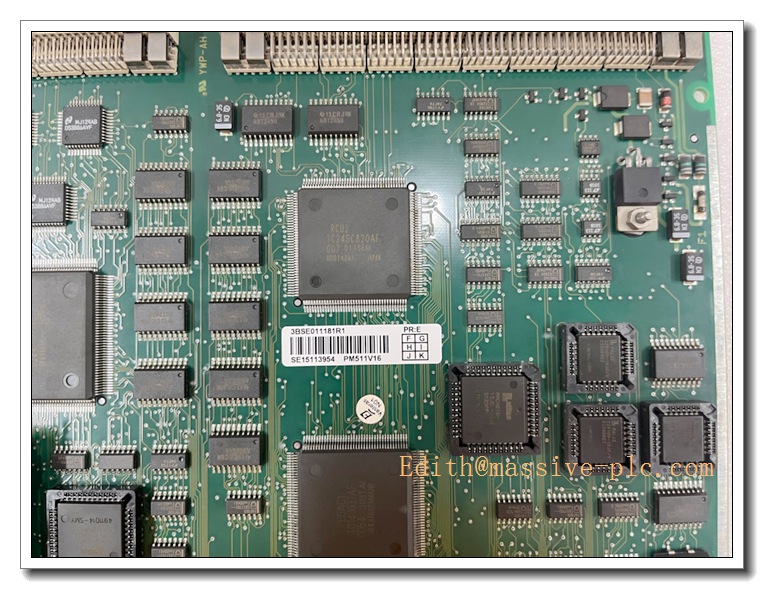
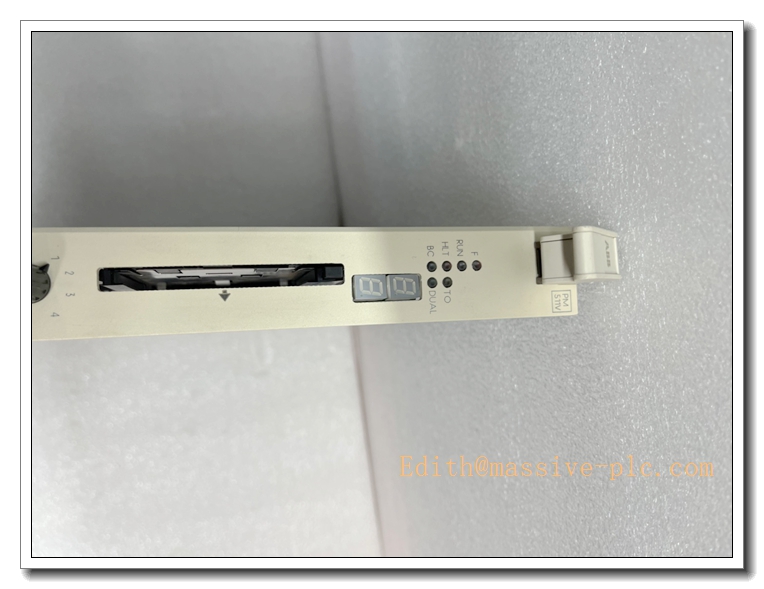
Description
PM511V16 3BSE011181R1 Product Technical Manual
Product Core Introduction
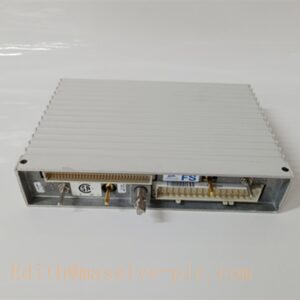
The PM511V16, part number 3BSE011181R1, is an ABB AC 800M high-performance processor module (CPU) for 800xA DCS / industrial PLC platform. It serves as the core controller to execute IEC 61131-3 control programs, handle logic calculation, process control, I/O scanning and system communication. Equipped with ECC memory and PCMCIA flash card slot for program storage and data logging, it communicates with S800 I/O modules and upper HMI via control network. Widely deployed in thermal power, pulp & paper, petrochemical and water treatment process control cabinets, it is a critical spare for legacy ABB AC800M system maintenance and retrofit.
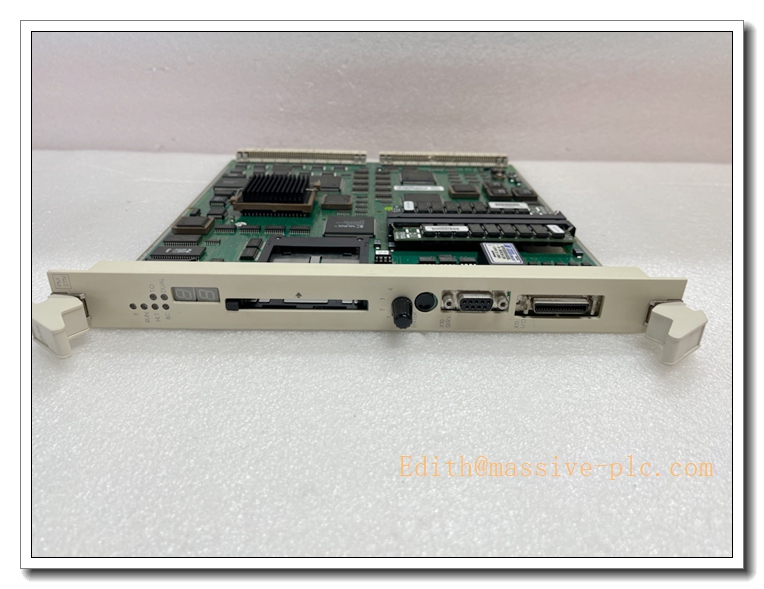
PM511V16 3BSE011181R1
Main Technical Specifications
- Model: PM511V16, Order Code: 3BSE011181R1
- Processor: 32-bit RISC CPU @ 200MHz
- Memory: 8MB ECC-protected DRAM; PCMCIA Type II slot for flash memory card
- Power Supply: Backplane 24VDC, operating range 18–30VDC
- Power Consumption: Max 12W
- Communication Interfaces: ControlNet / Ethernet, backplane bus for S800 I/O
- Supported Standards: IEC 61131-3 (ST, LD, FBD, IL, SFC); Modbus TCP/RTU, ABB 800xA proprietary protocol
- Operating Temperature: -20°C ~ +60°C
- Storage Temperature: -40°C ~ +85°C
- Relative Humidity: 5%–95% RH, non-condensing
- Protection Class: IP20 (rack slot mounted)
- MTBF: ≥96,000 hours
- Mounting: Standard ABB rack plug-in module
- Dimension: 274.5 mm × 27 mm × 270 mm
- Net Weight: 0.8 kg
- Status Indicators: Power, Run, Fault, Comm LED indicators
Recommended Homologous Series Models
- PM511V10: Lower memory version of PM511 series, form-fit compatible for simple control applications.
- PM511V20: Higher performance variant with larger memory for complex control algorithms.
- PM564: New generation AC800M CPU, upgrade replacement for PM511 series retrofit projects.
- CI801: Matching communication interface module used together with PM511V16.
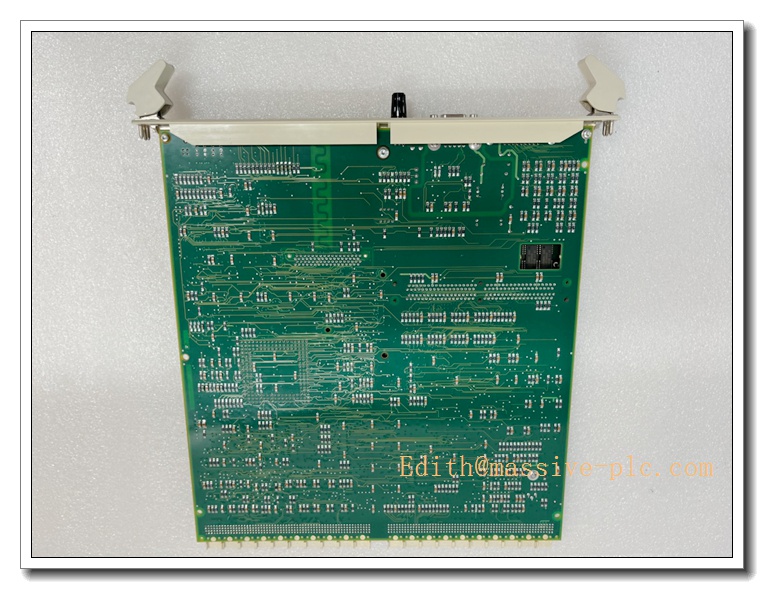
PM511V16 3BSE011181R1
Professional Quality Control & Test Standard Operating Procedures (SOP)
4.1 General Test Standard
All PM511V16 processor modules are inspected complying with ISO9001, IEC61131 and IEC61000 EMC standards. Each unit carries unique serial number for full lifecycle traceability.
4.2 Core Test SOP
- Visual & Mechanical Inspection: Inspect front panel, PCB, backplane edge connector, PCMCIA slot for scratches, cracks, bent pins and solder defects; verify rack guide rail mechanical fit.
- Power-On Basic Function Test: Apply minimum, rated and maximum 24VDC backplane supply; validate power, run and fault LED status; check boot sequence, confirm no overcurrent or short-circuit.
- Memory & ECC Function Test: Full RAM read/write test with ECC error detection; verify PCMCIA flash card read/write and program storage function.
- Logic & Program Execution Test: Download standard IEC61131-3 test project; execute cyclic logic scan, verify timer, counter and function block calculation accuracy.
- Communication Interface Test: Connect to S800 I/O and engineering station; test backplane I/O bus and network communication, check data exchange and frame loss rate.
- EMC Immunity Test: Conduct ESD, EFT, surge and radiated interference test per IEC61000; confirm no program crash, data corruption or false fault reporting.
- Temperature Cycling Test: -20°C ↔ +60°C thermal cycling for 40 cycles, 2 hours per cycle; validate memory stability and program execution reliability.
- Vibration & Shock Test: 10–150Hz sinusoidal vibration and mechanical shock test to verify PCB solder joints and backplane connector for power plant cabinet vibration environment.
- Continuous Burn-In Aging: 160 hours burn-in at 50°C with cyclic program running and I/O simulation; monitor CPU load and communication quality to screen intermittent hidden faults.
- Final Inspection & Packaging: Reset factory configuration, record serial number, anti-static sealing and attach inspection certificate.
New Module Installation Guidelines
5.1 Pre-installation Preparation
Cut off rack backplane power; confirm model and part number match purchase order; inspect module, edge connector and PCMCIA socket integrity. Wear anti-static wristband before touching PCB. Prepare screwdriver, torque screwdriver, Control Builder M engineering laptop and backup project file.
Safety reminder: Always back up the existing control program before CPU replacement.
5.2 Installation Steps
- Open rack slot cover; align PM511V16 with rack guide rails.
- Slide module fully into the slot until backplane connector is fully engaged.
- Tighten front panel retaining screws to specified torque to prevent loosening under cabinet vibration.
- Insert program flash card into PCMCIA slot if required.
- Restore rack 24VDC backplane power; check LED status after power-up.
- Download backup control project via Control Builder M, verify I/O mapping and parameter consistency.
5.3 Post-installation Commissioning
Energize rack power and observe LED indicators to confirm normal boot status. Connect engineering workstation, upload/download control project, perform CPU configuration and I/O check. Force test digital/analogue I/O channels, verify control logic execution. Check network communication between CPU, I/O modules and HMI. Run continuous 60-minute stability test; monitor CPU load and fault logs before putting into online control operation.
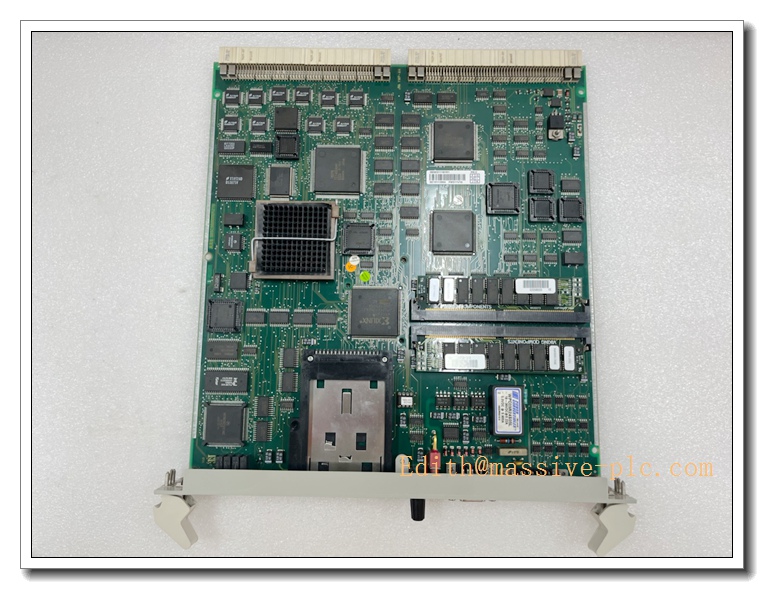
PM511V16 3BSE011181R1
Application Scenarios & Product Features
6.1 Core Application Scenarios
- Power plant auxiliary control system based on ABB AC800M / 800xA DCS
- Pulp & paper production line process control cabinet
- Petrochemical plant continuous process automation
- Water supply & wastewater treatment plant PLC control system
- Legacy ABB AC800M DCS spare replacement and system retrofit
6.2 Core Product Features
- AC800M core CPU processor for ABB 800xA distributed control platform
- 32-bit high-speed RISC processor with ECC protected RAM for high reliability
- PCMCIA flash card slot for program backup, recipe and event data storage
- Supports full IEC 61131-3 programming languages for flexible control algorithm development
- High-speed backplane bus to communicate with S800 series I/O modules
- Built-in comprehensive self-diagnosis for CPU, memory, bus and communication fault
- Rack hot-swap support in redundant CPU configuration for non-stop maintenance
- High EMC immunity, stable operation under strong electromagnetic interference in industrial control room
Frequently Asked Questions (FAQ)
Q1: Fault LED lit after rack installation, module fails to boot A1: Verify rack 24VDC backplane voltage; inspect backplane connector pin bending or poor contact; check flash card validity and program integrity. Replace module if hardware damage confirmed.
Q2: CPU cannot connect to engineering station A2: Check network cable and IP configuration; verify communication port settings; inspect network switch status; check if CPU is in download/online mode.
Q3: Program lost after power cycle A3: Confirm valid flash card inserted and program saved to flash memory; check PCMCIA slot contact; verify flash card health status.
Q4: Random CPU fault alarm during operation A4: Check cabinet ambient temperature and ventilation; inspect backplane power ripple; run memory ECC diagnostic; check grounding and interference from adjacent high-power cables.
Q5: I/O data refresh abnormal after CPU swap A5: Confirm downloaded project matches original program; verify I/O bus configuration and S800 module station address; re-synchronize I/O mapping.
A6: It can work as standalone AC800M PLC with Control Builder M programming, but advanced alarm, trend and asset management functions require 800xA server environment.

 Start Chat