
Description
3500/33-01-01 (149986-01+149992-01) Bently Nevada Vibration Monitoring Module Full Specification
Product Description
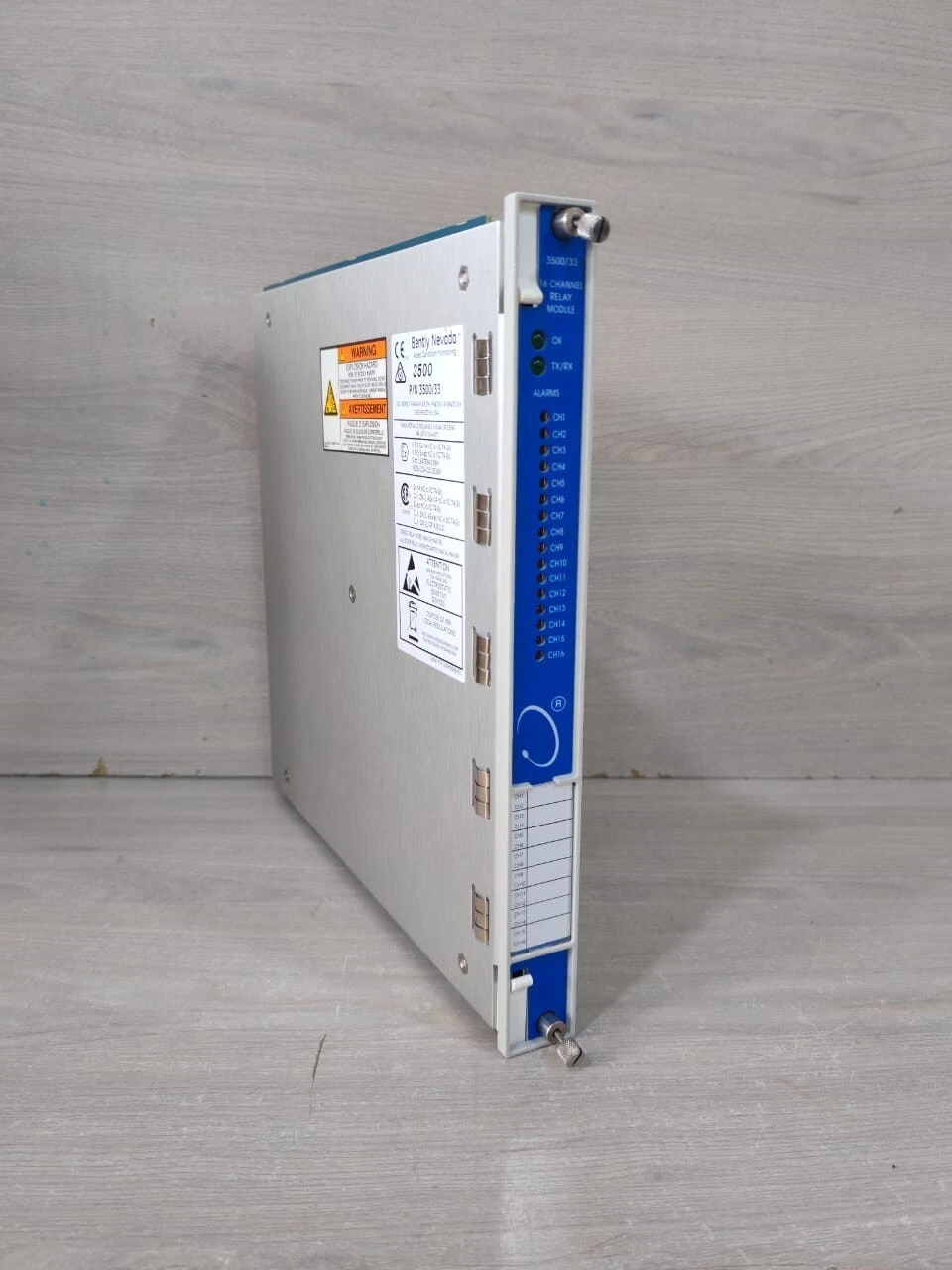
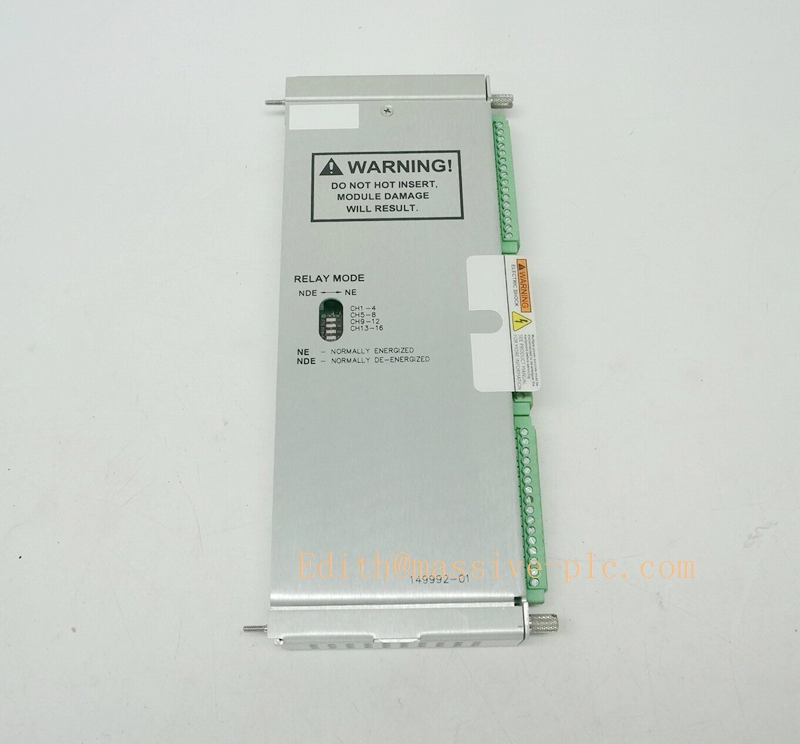
The Bently Nevada 3500/33-01-01 is a high-precision 4-channel vibration monitor module, assembled with part numbers 149986-01 (main board) and 149992-01 (terminal board), belonging to the industry-standard 3500 machinery protection system platform. Designed for critical rotating and reciprocating machinery condition monitoring, this module provides continuous, real-time measurement and protection of radial vibration, axial displacement, and casing vibration parameters.
As a core functional unit of the 3500 rack system, it supports compatibility with proximity probes, velocity sensors, and acceleration sensors. It converts field mechanical vibration signals into standard digital data for system analysis, local alarm indication, and upper-level DCS/SCADA transmission. The module integrates signal acquisition, filtering, threshold judgment, and fault diagnosis functions, meeting API 670 industrial machinery protection standards. It is widely deployed in heavy-duty industrial scenarios requiring 24/7 uninterrupted equipment health monitoring and fault early warning.
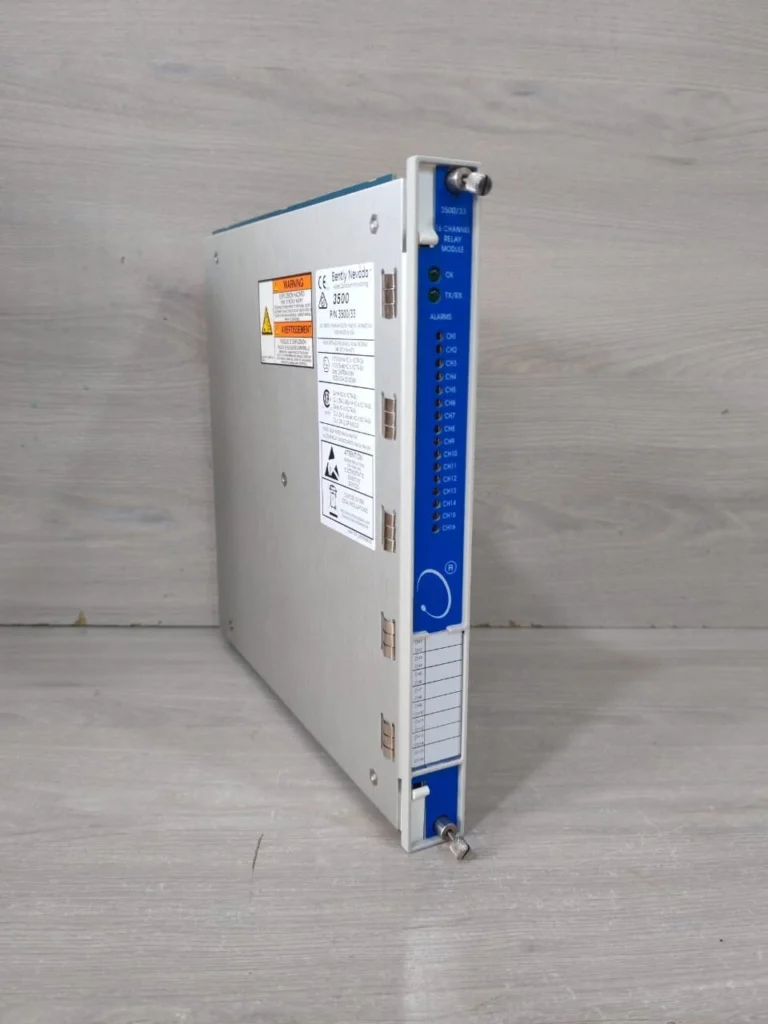
350033 149986-01
Core Technical Specifications
| Model Number | 3500/33-01-01 (Assembly: 149986-01 Main Board + 149992-01 Terminal Board) |
| Module Type | 4-Channel Vibration & Position Monitor Module |
| Supported Monitoring Parameters | Shaft radial vibration, shaft axial thrust displacement, casing absolute vibration |
| Compatible Sensors | Eddy current proximity probes, velocity transducers, accelerometers |
| Channel Quantity | 4 independent configurable measurement channels |
| Signal Frequency Range | 1 Hz – 15 kHz, configurable band-pass filtering |
| Measurement Accuracy | ±0.1% full scale, high-stability long-term sampling |
| Alarm & Trip Logic | Independent Alert (warning) and Danger (trip) threshold settings per channel |
| Output Interface | 4-20mA analog signal output, digital rack bus communication, relay alarm output |
| System Compatibility | Fully compatible with Bently Nevada 3500 rack system and configuration software |
| Power Supply | Powered via 3500 rack backplane, redundant power support |
| Operating Temperature | 0 °C to +60 °C |
| Storage Temperature | -40 °C to +85 °C |
| Compliance Standard | API 670, IEC industrial safety and EMC electromagnetic compatibility standards |
| Installation Form | Standard 3500 rack-mounted modular installation |
Key Features & Competitive Advantages
3.1 Core Features
- Multi-Functional 4-Channel Design: Four independent universal channels support flexible configuration for vibration or displacement monitoring, enabling multi-parameter synchronous collection for a single machine unit and maximizing rack space utilization.
- Multi-Sensor Compatibility: Adaptable to eddy current, velocity, and acceleration sensors, covering all common mechanical condition monitoring signal types for rotating equipment.
- Dual-Level Alarm Protection: Each channel supports independent warning and trip threshold configuration with delay logic, effectively filtering false alarms caused by transient signal fluctuations and ensuring accurate equipment protection.
- High-Precision Signal Processing: Built-in multi-stage filtering and signal denoising algorithms, which suppress on-site EMI interference and maintain high-precision measurement in complex industrial electromagnetic environments.
- Integrated Digital & Analog Output: Supports real-time 4-20mA analog transmission for DCS connection and digital bus data upload for upper computer analysis and data archiving.
- Complete Self-Diagnosis Function: Real-time self-check of module status, sensor disconnection, signal overload, and circuit faults, with automatic fault prompting to facilitate rapid maintenance.
3.2 Product Advantages
- Industrial-Grade Stability: Strictly compliant with API 670 petrochemical machinery protection standards, suitable for long-term continuous operation of core production equipment with zero downtime tolerance.
- High Compatibility & Scalability: Perfectly matched with the 3500 series rack system, supporting seamless expansion and modular replacement without modifying the overall system architecture.
- Low False Alarm Rate: Optimized signal filtering and threshold logic greatly reduce misjudgment caused by on-site noise, ensuring the stability of production system operation.
- Convenient Operation & Maintenance: Supports remote parameter configuration, real-time data viewing, and fault record query via dedicated software, reducing on-site debugging and maintenance costs.
- Durable Assembly Structure: Combined design of 149986-01 main control board and 149992-01 terminal board features stable wiring and strong shock resistance, adapting to harsh workshop vibration environments.
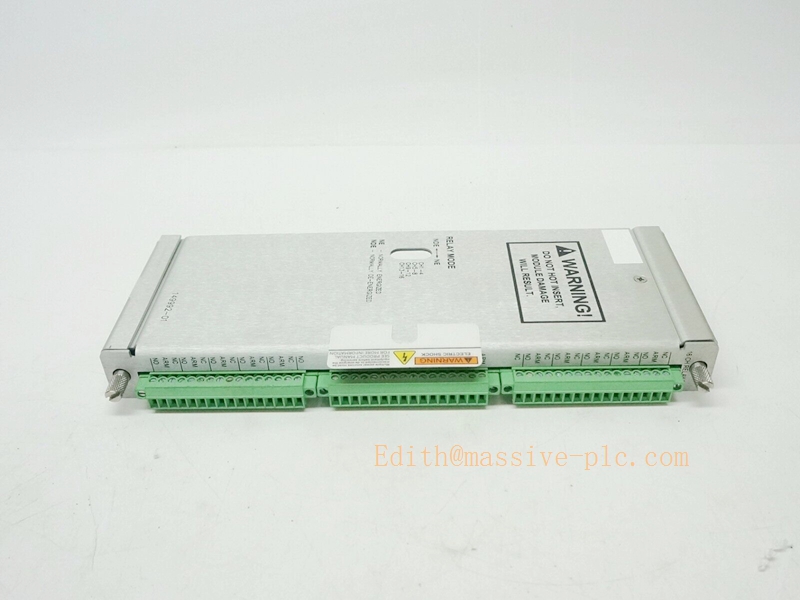
350033 149992-01
Typical Application Fields
The 3500/33-01-01 monitoring module is dedicated to condition monitoring and safety protection of core rotating machinery, widely used in high-reliability industrial scenarios:
- Power Generation Industry: Vibration and displacement monitoring of steam turbines, gas turbines, generators, and auxiliary blower equipment in thermal power plants.
- Petrochemical & Refinery: Real-time protection of large compressors, pumps, fans, and high-speed rotating process equipment to avoid mechanical failure shutdown risks.
- Metallurgy & Heavy Industry: Condition monitoring of rolling mills, large transmission shafts, and industrial high-power fans.
- Oil & Gas Industry: Safety monitoring of offshore and onshore power generation and process rotating equipment.
- Industrial Critical Equipment Retrofit: Standard replacement spare part for aging 3500 system modules, ensuring the continuity and stability of existing monitoring systems.
Technical Pitfalls to Avoid
- Mismatched Sensor Type Configuration: The module supports multiple sensor types; incorrect parameter configuration (e.g., configuring proximity probe channel for velocity sensor) will lead to full-scale signal deviation and invalid monitoring data.
- Ignoring Signal Wiring Isolation: Vibration signal cables must be isolated from high-voltage power cables. Mixed wiring causes severe EMI interference, resulting in data jitter and frequent false alarms.
- Unreasonable Threshold Setting: Excessively sensitive alarm thresholds cause nuisance trips, while overly loose thresholds fail to capture early mechanical faults, losing equipment protection significance.
- Assembly Mismatch Risk: The module relies on the matching combination of 149986-01 main board and 149992-01 terminal board. Mismatched board versions will cause communication failure and module non-startup.
- Over-Temperature Operation: Long-term operation above 60°C ambient temperature accelerates component aging, reduces measurement accuracy, and triggers automatic module protection shutdown.
- Missing Regular Calibration: Long-term unattended operation leads to signal drift. Failure to perform periodic accuracy calibration will result in inaccurate fault judgment.
- Improper Grounding Processing: Unstandardized shielding grounding or floating ground of signal cables will cause baseline drift and affect the stability of long-term monitoring data.
Related Product Recommendations
- Bently Nevada 3500/20 Rack Interface Module: Core communication and power management module of the 3500 system, supporting unified data interaction of all rack modules.
- Bently Nevada 3500/15 Power Supply Module: Redundant power supply unit for 3500 rack, providing stable backplane power for monitoring modules.
- 3300 Series Proximity Probes & Extension Cables: Matching high-precision eddy current sensors for shaft vibration and displacement monitoring, fully adapted to 3500/33 channels.
- Bently Nevada 3500/42 Position Monitor Module: Specialized enhanced module for high-precision axial displacement and thermal expansion monitoring scenarios.
- System Configuration Software: Official dedicated debugging software for 3500 series modules, supporting parameter setting, data monitoring, and fault diagnosis.
- Shielded Signal Cables & Terminal Accessories: Special anti-interference wiring accessories to ensure stable and accurate signal transmission.
Installation Guidelines
- Rack Installation Requirements: Install the module in a standard Bently 3500 industrial rack with fixed mounting; ensure the rack is well-grounded and placed in a dust-proof, temperature-controlled industrial cabinet.
- Module Assembly Standard: Strictly match the 149986-01 main board with the 149992-01 terminal board, confirm board version consistency, and ensure stable card edge connection with the rack backplane.
- Wiring Specification: Use dedicated shielded twisted-pair cables for sensor signals; separate signal wiring from high-power loop wiring, and standardize single-point shielding grounding to avoid loop interference.
- Parameter Configuration: Match channel parameters according to the actual sensor model and monitoring range, set reasonable alarm/trip thresholds and delay time based on equipment operating characteristics.
- Pre-Operation Verification: Complete static signal testing, channel calibration, and alarm function simulation before formal operation to confirm all monitoring functions are normal.
Daily Maintenance Guidelines
- Routine Inspection: Regularly check module operating status indicators, wiring tightness, and cabinet temperature/humidity; clean dust on module surface and terminal blocks quarterly.
- Periodic Calibration: Perform channel accuracy calibration and signal verification every six months to eliminate measurement drift and ensure monitoring precision.
- Fault Record Management: Regularly export module operation logs and fault records, analyze abnormal data trends, and pre-judge potential mechanical equipment faults.
- Accessory Maintenance: Inspect sensor cables and shielding layers regularly, replace aging and damaged cables in time to prevent signal attenuation and interference.
- Long-Term Storage & Standby: For spare modules, store in a dry and constant-temperature environment; perform power-on aging test regularly to ensure standby availability.

 Start Chat