Description
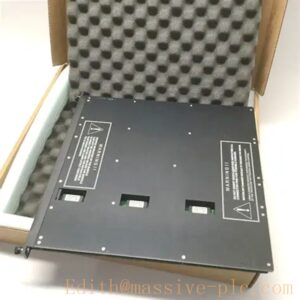
Honeywell 05701-A-0301 Single-Channel Gas Detection Control Card
Meta Description
The Honeywell 05701-A-0301 is a rugged, single-channel 4-20mA gas detection control card from the System 57 legacy fire and gas safety platform, purpose-built for precision signal acquisition, configurable alarm logic, and direct relay actuation in hazardous industrial environments across petrochemical, oil and gas, and chemical manufacturing facilities.
Core Product Introduction
The Honeywell 05701-A-0301 is a dedicated single-channel control card belonging to Honeywell’s classic System 57 fire and gas safety product line, engineered to serve as a complete standalone signal processing and logic execution unit for individual 4-20mA output gas detectors. Unlike multi-channel aggregated modules, it delivers fully independent, isolated signal processing for one single field gas sensor, eliminating cross-channel interference and ensuring no single point of failure can disrupt multiple safety monitoring points. Designed for direct integration into System 57 rack architectures, it natively supports zero/span calibration, adjustable alarm thresholds, and on-board relay output to directly trigger local alarm beacons, horns, or small safety interlock devices without requiring additional intermediate modules. Its compact, plug-in form factor fits seamlessly into standard System 57 rack slots, making it the most widely deployed spare part for legacy Honeywell F&G systems commissioned before the 2000s, with hundreds of thousands of units still operating reliably in active industrial facilities worldwide.
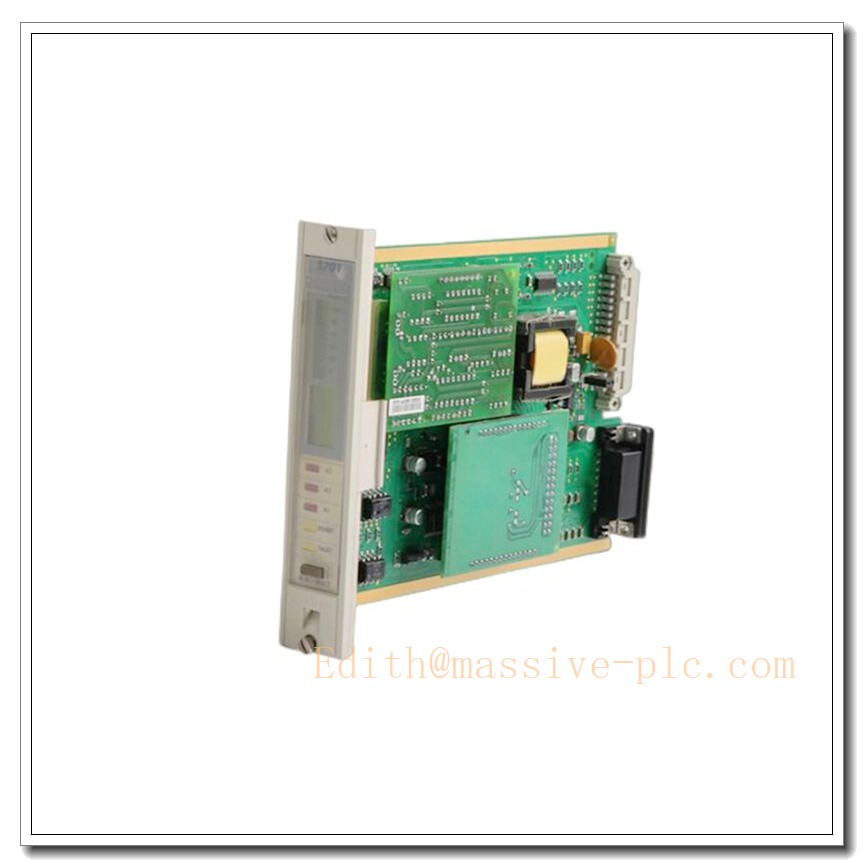
05701-A-0301
Key Technical Specifications
- Manufacturer: Honeywell Process Solutions
- Part Number: 05701-A-0301
- Product Type: Single-Channel Gas Detection Control Card
- System Compatibility: Honeywell System 57 (5701 Series) fire and gas safety platforms, TPS, Experion PKS legacy DCS architectures
- Input Signal: 4-20mA analog from field gas detectors
- Output: Form C (SPDT) safety-rated relay contact
- Power Supply: 18-32 VDC (nominal 24 VDC)
- Typical Power Consumption: 3.25W in 4-20mA operating mode
- Operating Temperature Range: -40°C to +85°C
- Storage Temperature Range: -55°C to +95°C
- Relative Humidity: 0-95% RH, non-condensing
- Vibration Resistance: 10-2000Hz, 0.015″ amplitude compliant with industrial standards
- Shock Resistance: 15g, 11ms half-sine pulse
- Physical Dimensions: 110mm (H) × 90mm (W) × 30mm (D)
- Net Weight: 0.2kg
- Country of Origin: USA
- Certifications: CE, UL system-level safety approval for hazardous area deployment
- Expansion Support: Native compatibility with 05701-A-0285 analog output module for isolated 4-20mA signal transmission to external PLCs or chart recorders
Honeywell Brand Milestones
Honeywell’s legacy in single-channel gas detection control technology traces back to the early 1990s, when the company launched the System 57 unified fire and gas safety platform to address the critical safety requirement of fully independent, non-interfering monitoring points for high-risk industrial facilities. The 05701-A-0301 was developed as the core building block of this platform, allowing plant engineers to scale safety systems one independent channel at a time, eliminating the risk of multi-channel aggregated modules failing and disabling dozens of gas detection points simultaneously. This design philosophy quickly made System 57 the global benchmark for process safety F&G systems, with the 05701-A-0301 becoming the most widely deployed single-channel control card in the industry. Today, over 30 years after its initial launch, millions of these units remain in active service across refineries, offshore platforms, and chemical plants, many still operating reliably after 25+ years of continuous runtime.
Relevant Industry News Context
In recent years, global process industry operators have reported a sharp surge in demand for authentic Honeywell 05701-A-0301 spare parts, as thousands of legacy System 57 fire and gas systems enter their critical 20-30 year maintenance window. Major petrochemical asset owners in the Middle East and Asia have documented that using original 05701-A-0301 units for targeted single-channel replacements reduces unplanned gas detection loop downtime by over 50% compared to generic third-party replacement cards, which often fail to maintain accurate 4-20mA signal linearity and void existing SIL system certifications. Leading industrial safety conferences have repeatedly highlighted that the single-channel independent architecture of the 05701-A-0301 is still considered a best practice for high-risk safety monitoring points, as it prevents cascading system failures that can occur with modern multi-channel aggregated modules.
Typical Application Scenarios
- Refinery Critical Point Monitoring: Deployed on high-risk process units such as reactor outlets and pump stations, where independent single-channel monitoring eliminates the risk of a single module failure disabling multiple critical gas detection points.
- Offshore Oil and Gas Platforms: Installed on offshore production facilities, where its ultra-wide operating temperature range and high vibration resistance ensure reliable performance in harsh marine environments with constant mechanical motion.
- Chemical Storage Tank Farms: Used to monitor individual toxic and flammable gas detectors around large chemical storage tank clusters, providing fully independent alarm logic for each tank’s dedicated safety monitoring point.
- Legacy System 57 Retrofit Projects: Serves as a drop-in replacement for failed original single-channel cards in 1990s-era Honeywell F&G systems, allowing facilities to extend system service life one channel at a time without costly full platform migration.
- Small-Scale Standalone Safety Systems: Deployed in small chemical laboratories, paint mixing facilities, and boiler rooms, where a single 05701-A-0301 card paired with a gas detector can form a complete, self-contained gas safety monitoring system without requiring a full rack architecture.
Core Functional Advantages
- Fully Independent Single-Channel Architecture: No shared signal processing resources between channels, eliminating cross-channel interference and ensuring a single hardware fault can never disable more than one gas detection point, maximizing overall system safety integrity.
- On-Board Standalone Logic Execution: No reliance on a central system controller to trigger alarms; the card can directly activate local alarm beacons and horns via its built-in relay output even if the main System 57 controller experiences a fault.
- Ultra-Wide Environmental Adaptability: Operating temperature range from -40°C to +85°C allows the module to be installed in unconditioned field-side control cabinets with no heating or air conditioning, a critical benefit for remote facilities in extreme climate zones.
- Engineering Card No-PC Configuration: Operators can perform zero calibration, span calibration, alarm threshold adjustment, and maximum concentration reset operations directly on the module using a dedicated Honeywell 05701-A-0361 engineering card, no laptop or configuration software required during field maintenance.
- Flexible Expansion Capability: Supports direct connection to the optional 05701-A-0285 analog output module, providing isolated 4-20mA signal transmission to external PLCs, chart recorders, or remote monitoring systems without additional signal conversion hardware.
Quality Control Procedure
Every authentic 05701-A-0301 module undergoes Honeywell’s strict multi-stage legacy safety component validation workflow before release:
- Component Traceability Verification: All precision 4-20mA signal conditioning chips, relay elements, and power regulation semiconductors are cross-checked against original Honeywell BOM records to eliminate non-safety-rated or counterfeit parts.
- 72-Hour Full-Load Burn-In Test: Units operate under full 4-20mA input load at 85°C elevated ambient temperature to screen out early-life component failures and signal drift.
- Full-Range Signal Calibration: Every module is calibrated across the full 4-20mA input range to guarantee ±0.1% full-scale measurement accuracy.
- Vibration and Shock Screening: Modules are subjected to simulated industrial vibration and shock profiles per IEC 60068 standards to confirm mechanical and electrical integrity.
- Engineering Card Function Validation: All calibration, alarm threshold adjustment, and reset operations are tested with an official Honeywell 05701-A-0361 engineering card to ensure full field maintainability.
- Final Documentation: A full safety compliance certificate is generated for each unit, with all performance parameters logged for complete regulatory traceability.
Related Honeywell Model Recommendations
- Honeywell 05701-A-0361 – Dedicated System 57 engineering card, the official configuration tool for performing calibration and parameter adjustment on the 05701-A-0301.
- Honeywell 05701-A-0285 – Isolated analog output expansion module, the optional accessory that adds 4-20mA signal output capability to the 05701-A-0301.
- Honeywell 05701-A-0284 – Catalytic combustion sensor driver module, the complementary dedicated driver for flammable gas catalytic bead sensors in System 57 architectures.
- Honeywell 05701-A-0282 – High-integrity relay control card, for expanding high-power safety interlock output capacity for large ESD system actuators.
- Honeywell SPXCDALMHM – XCD series 4-20mA output gas detector, the modern field sensor model fully compatible with the 05701-A-0301 control card.
- Honeywell 05704-A-0144 – Modern System 57+ four-channel gas detection control card, the current-generation multi-channel successor for new F&G system builds.
- Honeywell FC-SDI-1624 – 16-channel digital input module, expanding discrete alarm and status signal acquisition capacity across large plant areas.
- Honeywell FC-QPP-0001 – Safety Manager processor module, the modern SIL 3 certified controller that replaces legacy System 57 main processors.
Frequently Asked Questions
- Q: Can the 05701-A-0301 operate completely standalone without a System 57 main controller?
A: Yes, the card can independently process 4-20mA gas detector signals, trigger its on-board relay alarm output, and display concentration readings locally, forming a fully self-contained safety monitoring system. - Q: What happens if the 4-20mA field wiring experiences an open circuit?
A: The module’s built-in fault diagnostics immediately detect the loss of signal current, flag a clear “wiring fault” alarm, and trigger a predefined safe state to prevent false no-gas readings. - Q: Can I perform calibration on-site without a laptop?
A: Yes, using the official Honeywell 05701-A-0361 engineering card, you can complete zero and span calibration directly on the module in less than 2 minutes, no configuration software required. - Q: Is this module compatible with non-Honeywell 4-20mA output gas detectors?
A: Yes, it supports any standard industrial 4-20mA gas detector, making it extremely flexible for retrofitting mixed-vendor field sensor fleets into a unified System 57 architecture. - Q: What is the typical service life of an authentic 05701-A-0301?
A: Under normal operating conditions, genuine Honeywell units can reliably operate for over 25 years, far exceeding the 5-10 year service life of generic multi-channel industrial control cards.
Installation and Configuration Guide
- Confirm the target System 57 rack slot is fully de-energized, and inspect the backplane connector pins to ensure they are free of corrosion or physical damage before installation.
- Align the 05701-A-0301 module with the rack guide rails, slide it smoothly into position, and tighten the front-panel mounting screws to ensure a secure, vibration-resistant backplane connection.
- Connect the field 4-20mA gas detector wiring strictly following the original Honeywell System 57 wiring diagram, properly grounding cable shields at the cabinet termination point to minimize electromagnetic interference.
- Restore rack power, and verify the front-panel status LEDs illuminate in the normal power-up sequence defined in the System 57 safety manual.
- Insert the official 05701-A-0361 engineering card, perform zero calibration with clean air, then complete span calibration using certified target concentration calibration gas.
- Adjust the two independent alarm setpoints (low alarm and high alarm) to match your site safety requirements, and test the on-board relay output to confirm correct alarm actuation.
- Document the module serial number and all calibration results in the plant F&G system maintenance log, and conduct an 8-hour continuous runtime observation before returning the gas detection loop to full operational service.