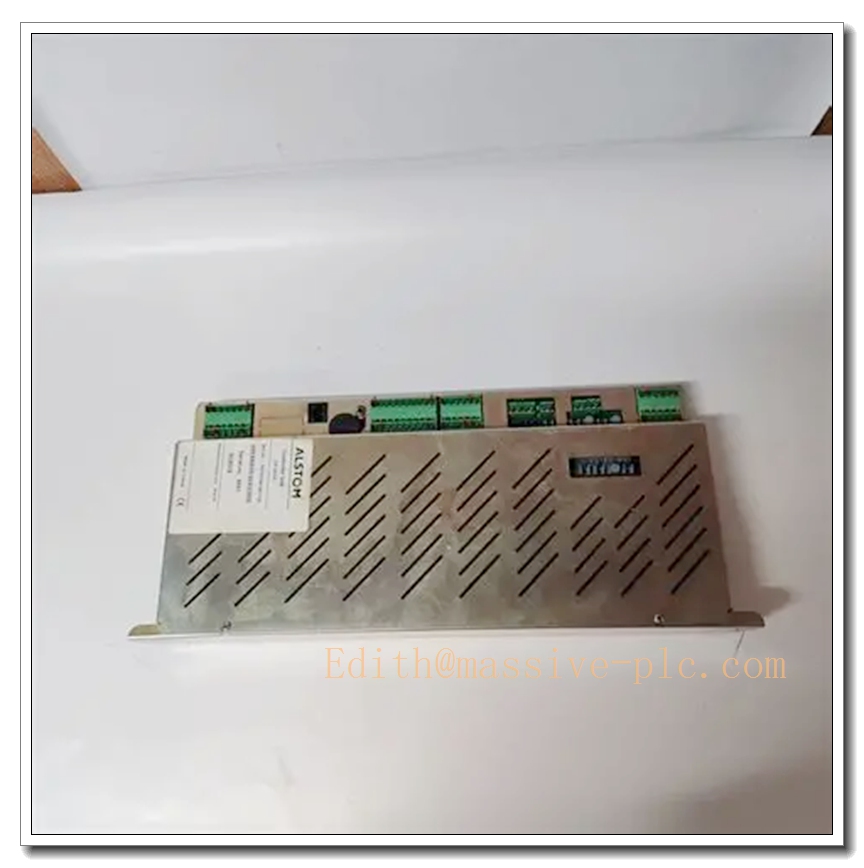
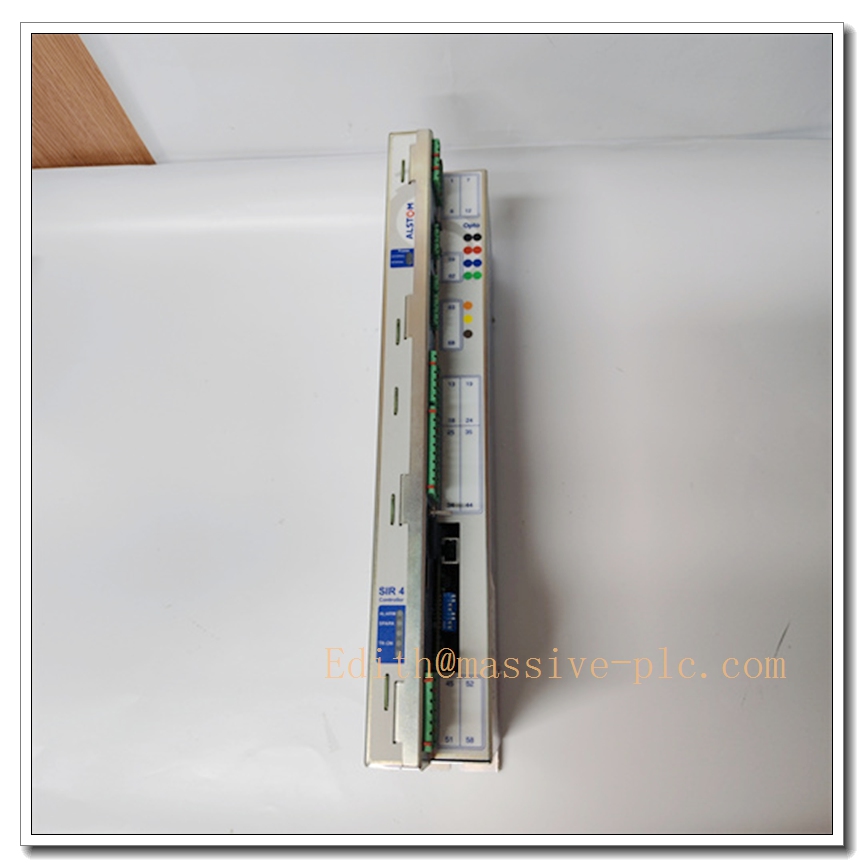
Description
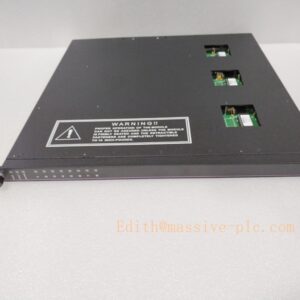
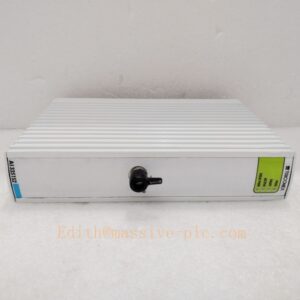
ALSTOM V0701596-001102 SIR Basic Turbine Control & Monitoring Controller Unit
Product Overview
The ALSTOM V0701596-001102 is a legacy SIR Basic controller unit developed for heavy-duty steam turbine and gas turbine control & protection systems in power generation plants. This rack-mount controller executes real-time turbine regulatory logic, analogue signal acquisition, speed monitoring, process parameter handling and local I/O interlock management. It collects measurements from vibration, temperature, pressure and speed transducers, performs closed-loop control calculations, communicates with plant DCS and supervisory HMI, and implements safety interlock logic for turbine trip protection. It is widely deployed on ALSTOM legacy turbine islands; this series is discontinued by original manufacturer and available only as spare replacement for existing operational units.
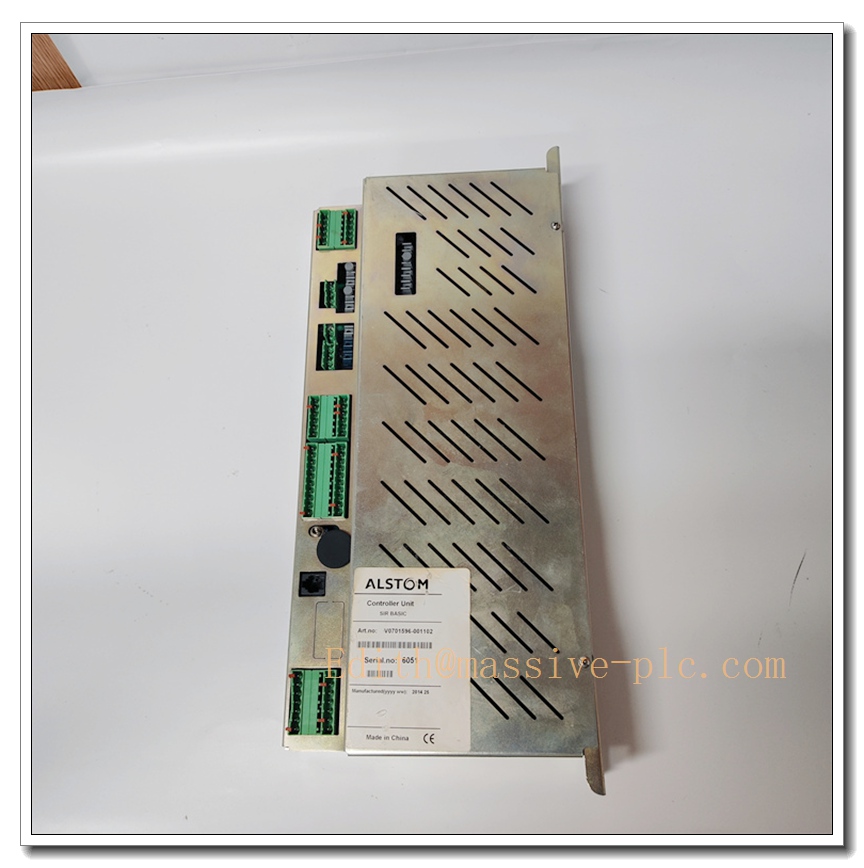
V0701596-001102
Key Technical Specifications
- Part Number: V0701596-001102
- Manufacturer: ALSTOM
- Product Type: SIR Basic Controller Unit
- Power Supply: 220V AC
- Analogue I/O: 0–10V analogue input / output channels; multi-channel digital DI/DO terminals
- Communication Interfaces: Ethernet, RS485, RS232
- Supported Protocols: Modbus RTU/TCP, PROFIBUS
- Operating Temperature: -10°C ~ +50°C
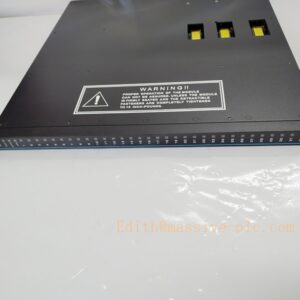
- Mechanical: Cabinet rack mount aluminium housing, front panel status LED indicators
- Memory: Onboard non-volatile flash for logic configuration, parameter storage and event logs
- Diagnostics: Continuous self-test, power failure detection, I/O channel fault diagnosis, watchdog monitoring
- Function: Turbine speed control, process signal monitoring, safety interlock, alarm & event recording
- Weight: Approx. 0.5 kg
- Certification: CE compliant, designed for power station critical control systems
Recommended 8 Similar Series Models
- ALSTOM V0701596-001101
- ALSTOM V0701596-001103
- ALSTOM V0701596-001104
- ALSTOM V0701600-002101
- ALSTOM V0701598-001202
- ALSTOM V0701597-001102
- ALSTOM V0701595-001102
- ALSTOM V0701601-002201
Quality Control & Test Standard Operating Procedure (SOP)
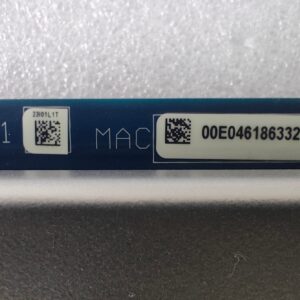
- Visual Inspection: Examine aluminium enclosure, front panel LEDs, terminal block connectors, PCB, labels and serial marking. Confirm part number and hardware revision match documentation, check for corrosion, burnt traces or damaged pins.
- Continuity & Insulation Test: Perform continuity check for all wiring terminals; insulation resistance test between power circuits and signal I/O circuits to eliminate short-circuit risk.
- Power-Up Test: Apply rated 220V AC power gradually. Verify power consumption stays within specification, LED boot sequence completes normally, no overheating or abnormal noise.
- Built-in Self-Diagnostic Test: Execute full controller self-test routine. Confirm watchdog function, memory integrity and internal hardware checks pass without fault codes.
- Analogue & Digital Channel Calibration: Inject standard 0–10V reference analogue signals to each AI channel, validate linearity and reading accuracy. Simulate DI/DO status change to verify relay and digital input response.
- Communication Interface Test: Connect Ethernet and RS485 ports. Validate Modbus / PROFIBUS data read/write, stable communication and timestamp integrity.
- Interlock & Logic Function Test: Simulate turbine alarm and trip conditions, verify interlock logic execution, event logging and alarm timestamp recording.
- Environmental Burn-in Test: Continuous powered burn-in under rated ambient temperature for screening early-life component failures.
- Final Recheck & Documentation: Repeat core functional tests after burn-in. Generate serial-number traceable test report before anti-static packaging and shipment.
New Module Installation Guide
- Pre-Installation Preparation: Implement lockout-tagout (LOTO) procedure for turbine control cabinet. Wear ESD wrist strap and anti-static mat. Confirm part number and hardware revision match site BOM and existing turbine control system firmware compatibility.
- Cabinet Slot Inspection: Check mounting space, terminal blocks and wiring for dirt, oxidation or damaged terminals. Clear obstructions for installation.
- Controller Mounting: Secure the V0701596-001102 unit onto cabinet DIN rail or rack mounting brackets. Fasten mounting screws evenly.
- Wiring Termination: Wire 220V AC power supply, analogue/digital I/O field signals and communication cables following ALSTOM SIR wiring diagram. Separate power cables and low-level signal cables; properly implement cable shielding and single-point grounding.
- Power Restore: Energize power supply. Observe front panel LED indicators to monitor boot progress and confirm no hardware fault alarms.
- Configuration & Commissioning: Connect engineering tool software, upload valid turbine control logic and parameter set, configure network addresses and fieldbus settings. Download configuration to controller non-volatile memory.
- I/O Simulation & Logic Test: Perform channel injection test on analogue inputs, trigger digital signals to verify interlock and trip logic response. Test communication to DCS/HMI.
- Post-Installation Record: Save configuration backup file, record serial number and commissioning test results in site maintenance log.
Application Scenarios & Features
Application Scenarios
- ALSTOM legacy steam turbine control & protection systems in thermal power plants
- Gas turbine auxiliary monitoring and interlock control
- Power station boiler and electrostatic precipitator control systems
- Retrofit & spare replacement of existing ALSTOM SIR control cabinets
- Turbine speed regulation, thrust bearing and vibration signal interlock
Core Features
- Real-time closed-loop turbine speed and process parameter control
- Multi-channel analogue and digital I/O for field sensor and actuator interface
- Multiple industrial communication ports for DCS and HMI integration
- Non-volatile flash memory retains control logic and event logs through power loss
- Built-in watchdog and comprehensive hardware self-diagnostics for high availability
- Rack compact aluminium housing, suitable for power plant control cabinet environments
- Support for safety interlock and turbine trip alarm logic
- Designed for integration with vibration monitoring systems including Meggitt VM600
FAQ
Q1: Is V0701596-001102 still in active production?
A1: This ALSTOM SIR Basic controller is obsolete and no longer manufactured. It is only supplied as spare replacement for existing legacy turbine control systems. New turbine projects should use modern control platforms.
Q2: Can I replace V0701596-001102 with V0701596-001101 directly?
A2: Hardware form factor is similar, but internal firmware, I/O mapping and logic configuration differ. Verify original BOM, program version and terminal definition before swap. Direct replacement without validation may cause interlock malfunction.
Q3: What is the main function of the SIR Basic controller?
A3: It handles turbine speed control, analogue process signal collection, digital interlock logic, alarm management and communication with plant supervisory systems. It can receive vibration and temperature signals from TSI systems and execute related safety interlocks.
Q4: What communication protocols are supported?
A4: Modbus TCP, Modbus RTU over RS485 and PROFIBUS, with RS232 port for local engineering commissioning.
Q5: What to do if the controller reports I/O channel fault after installation?
A5: Inspect field wiring, shielding and grounding. Check terminal block for loose connections or short circuit. Run controller self-test. Isolate fault between field sensors/cables and the controller hardware.
Q6: Is this controller SIL certified?
A6: SIL certification belongs to the complete turbine protection system, not standalone controller hardware. Full system safety assessment is required for SIL compliance.
Q7: What is recommended calibration and maintenance cycle?
A7: Annual inspection and functional test is recommended. Full logic and I/O calibration every 24 months, subject to power plant safety and maintenance procedures.
Q8: Can I modify the turbine control logic locally?
A8: Control logic and parameters can only be modified via dedicated ALSTOM engineering software. Local front panel does not support program editing. Any logic change needs site safety approval and full functional test.