
Description
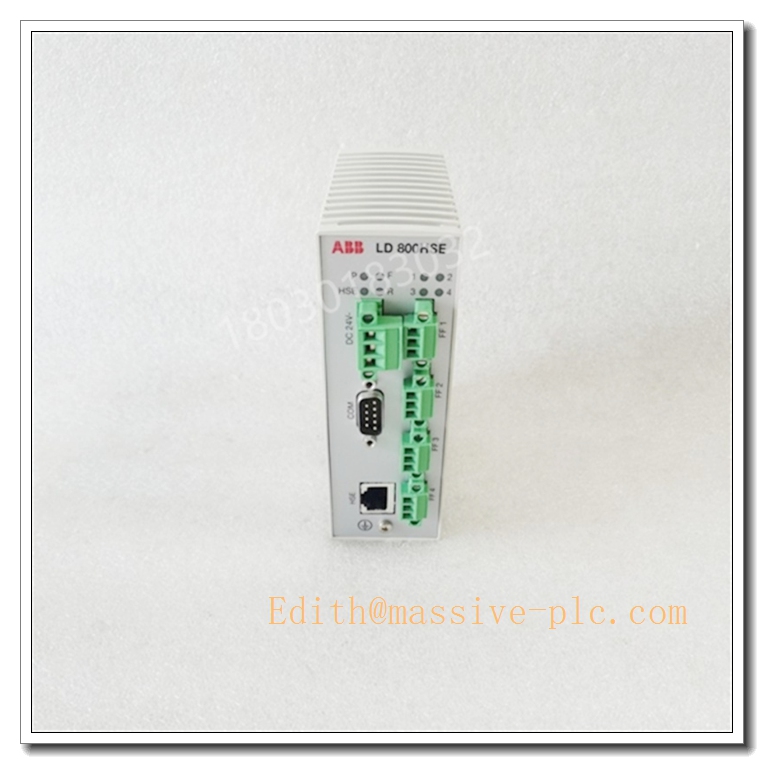
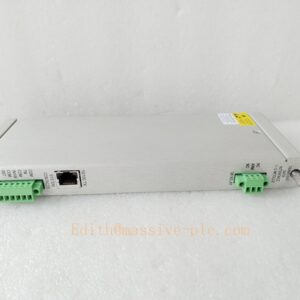
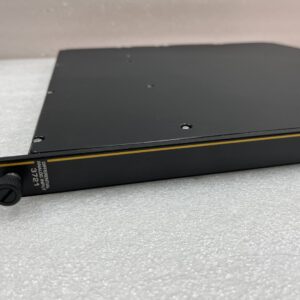
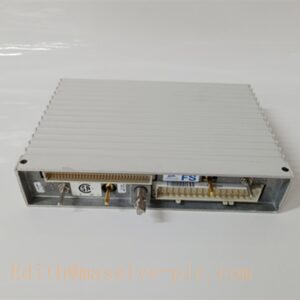
ABB LD800HSEEX 3BSE073314R1 FOUNDATION Fieldbus HSE Linking Device (Hazardous Area Version)
Product Core Introduction
The LD800HSEEX (3BSE073314R1) is ABB explosion-certified FOUNDATION Fieldbus linking device, designed as a gateway between FF HSE (High Speed Ethernet) backbone and FF H1 fieldbus segments for System 800xA DCS platform. This EX variant is certified for Zone 2 hazardous locations. It bridges high-speed HSE Ethernet and up to 4 independent FF H1 links, enabling bidirectional digital communication between field transmitters, valves, actuators and upper-level control system. It works as LAS (Link Active Scheduler) for each H1 segment, supports redundant pairing for high availability, transparent device configuration and fieldbus block data access. Widely deployed in oil & gas, refinery, chemical and petrochemical plants with explosive atmosphere.
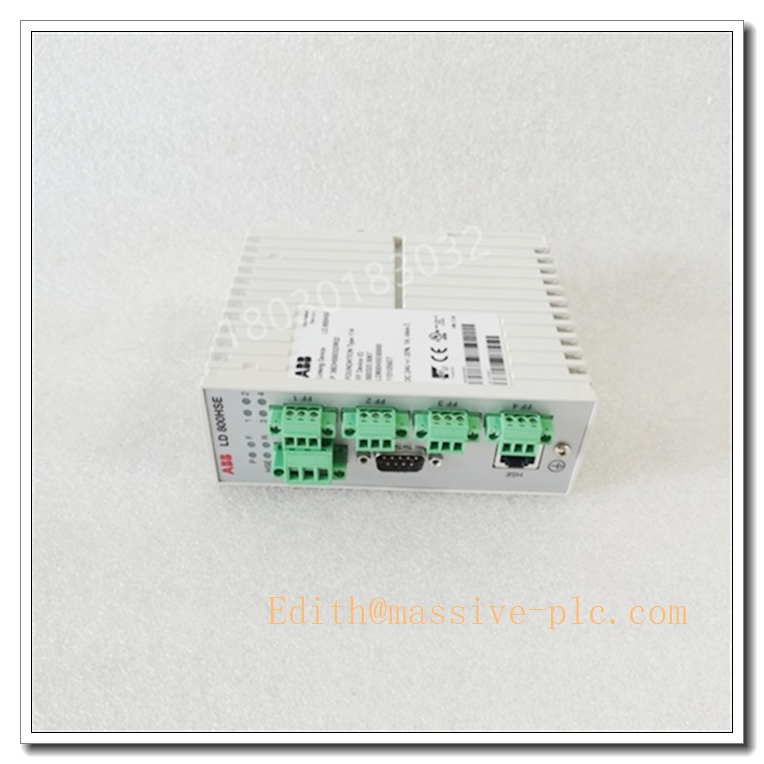
LD800HSEEX 3BSE073314R1
Main Technical Specifications
- Part No: 3BSE073314R1
- Model: LD800HSEEX
- Type: FF HSE Linking Device, Zone2 hazardous area version
- Mounting: DIN rail 35mm
- Supply Voltage: 24 VDC (±20%)
- Typical Power Consumption: 4.8 W, 200mA
- Communication Ports:
- 1 × HSE Ethernet RJ45, 10/100BASE-TX auto-sensing
- 4 × FF H1 fieldbus ports, 31.25 kbit/s
- 1 × RS232 9pin D-sub for local commissioning
- Protocol: FOUNDATION Fieldbus HSE Class42c
- Redundancy: Support dual LD800HSEEX redundant configuration
- Operating Temperature: 0 ℃ ~ +55 ℃
- Storage Temperature: -20 ℃ ~ +70 ℃
- Humidity: 0~95% RH, non-condensing
- Protection Class: IP20 (inside cabinet)
- Certifications: ATEX, IECEx Zone2, CE, EMC
- Dimension: 47 ×131 ×111 mm
- Weight: Approx. 0.4 kg
Recommended same-series ABB models
- LD800HSE (non-EX standard version) – FF linking device for safe area
- CI860K01 – HSE communication interface for AC800M
- CI857K01 (3BSE018144R1) – INSUM Ethernet Communication Module
- UFC933A101 (3BHE048062R0101) – Universal Field Controller Module
- UFC912A101 (3BHE039426R0101) – EOI Emitter Output Interface Board
Quality Control Test SOP
- Visual Inspection: Check housing, terminal blocks, RJ45, D-sub connector, marking label, no scratch or damage.
- Continuity & Isolation Test: Verify galvanic isolation between H1 fieldbus and HSE Ethernet circuits.
- Power-on Burn-in Test: 24VDC powered for 4 hours, monitor LED indicators and device temperature.
- H1 Fieldbus Function Test: Connect FF H1 field instruments, verify LAS scheduling and data read/write.
- HSE Ethernet Communication Test: Connect to System800xA HSE network, validate transparent device access.
- Redundancy Failover Test: Pair two LD800HSEEX units, test primary/secondary switchover without communication loss.
- EMC & Hazardous Area Compliance Test: IEC61000 ESD/EFT/surge, ATEX/IECEx related safety test.
- Firmware version check, serial number archiving and anti-static packaging.
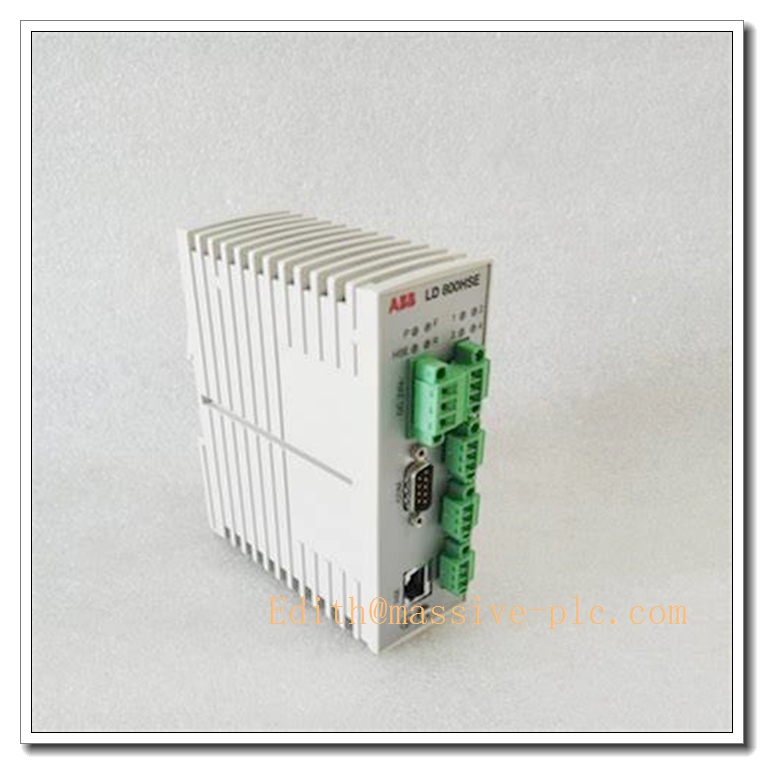
LD800HSEEX 3BSE073314R1
New Module Installation
WARNING: For Zone2 hazardous area application, strictly follow ATEX/IECEx installation requirements. Wear ESD wristband during handling.
- Cut off 24VDC supply before installation. Mount device on standard 35mm DIN rail inside certified explosion-proof cabinet.
- Wire 24VDC power to power terminal. Separate H1 fieldbus cable from high voltage cables.
- Connect HSE Ethernet cable to RJ45 port; connect up to 4 H1 fieldbus segments to corresponding terminals.
- RS232 port for local commissioning only, not for permanent operation.
- Complete wiring inspection, check bus termination resistor on each H1 segment.
- Restore power, access via System800xA engineering station, configure HSE network and scan H1 field devices.
- Set LAS role, download fieldbus device parameters and validate measurement & control signals.
- If redundant architecture required, configure redundancy link between paired LD800HSEEX.
Note: H1 fieldbus needs external fieldbus power supply, not powered by itself.
Application Scenarios & Features
Application Scenarios
- Oil refinery, petrochemical, chemical process plants (Zone2 hazardous area)
- Offshore platform process control
- Natural gas processing plant DCS system
- Pharmaceutical & fertilizer hazardous process units
- ABB System800xA DCS FOUNDATION Fieldbus network integration
Key Features
✅ Zone2 ATEX/IECEx certification for explosive gas environment ✅ 4 independent FF H1 segments, works as LAS for each bus ✅ HSE high-speed Ethernet uplink to System800xA control network ✅ Supports redundant deployment for high availability critical process ✅ Galvanic isolation between H1 and HSE circuits ✅ DIN rail compact installation, easy cabinet integration ✅ LED status indicators for power, fault, HSE and H1 channel diagnosis ✅ Transparent access to all FF fieldbus function blocks from host system
FAQ
Q1: Red fault LED after power-up? A: Check 24VDC power supply. Inspect H1 bus short or wrong termination resistor. Verify firmware version. Disconnect H1 field wiring to isolate fault source.
Q2: H1 field devices cannot be scanned? A: Check H1 bus power supply and bus termination. Check H1 wiring polarity and cable integrity. Confirm LAS scheduler status on .
A: Hardware function same, but carries hazardous area certification. Must verify site area classification and explosion protection requirement before replacement.
Q4: Spare storage requirement? A: Store in ESD shielding bag, dry warehouse, temperature range -20~+70℃, avoid vibration and condensation.
Q5: What happens if linking device fails? A: All 4 connected H1 fieldbus segments lose communication to 800xA. Field instruments still maintain local control via FF function blocks, but remote monitoring and host control will be lost.

 Start Chat