Description
ABB AC 800PEC UAD155 3BHE029110R0111 Full English Technical Document
Product Title
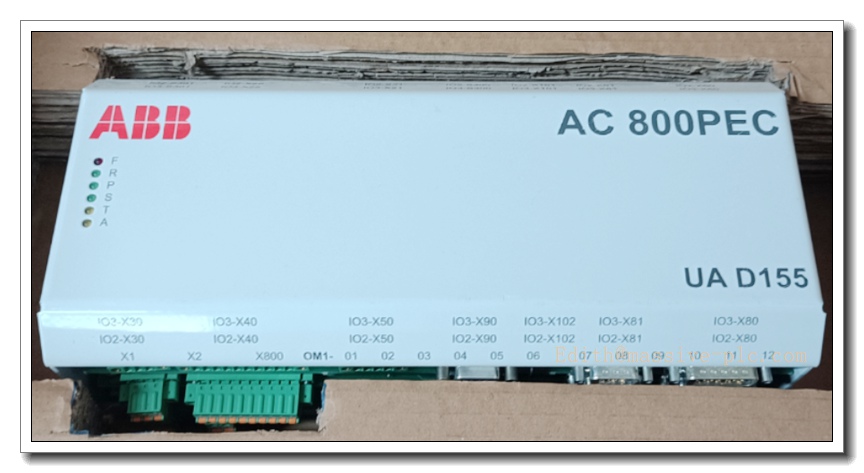
ABB AC 800PEC UAD155 3BHE029110R0111 Excitation Controller Combi I/O Module
AC 800PEC UAD155 3BHE029110R0111
Product Description
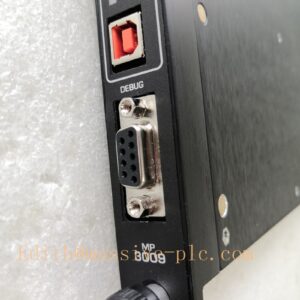
The ABB 3BHE029110R0111 (UAD155A0111) is a specialized, high-reliability excitation controller and combined I/O module purpose-built for the ABB AC 800PEC industrial control platform. Designed for critical power generation and heavy industrial drive scenarios, it acts as a centralized signal interface between the AC 800PEC main controller and field-level devices, executing high-precision generator field regulation, multi-channel analog/digital signal synchronous acquisition, and real-time control output. It delivers extreme environmental tolerance and seamless native integration with ABB 800xA distributed control systems, ensuring uninterrupted stable operation even in harsh, unconditioned industrial environments such as turbine halls and high-power drive cabinets.
Technical Specifications
- Product Type: Excitation Controller Combi I/O Module
- Control System Compatibility: ABB AC 800PEC Platform
- Total Differential Analog Input Channels: 16
- Supported Analog Input Ranges: ±10 V, 0–20 mA, 4–20 mA
- Analog-to-Digital Resolution: 16-bit (0.0015% full scale)
- Measurement Accuracy: ±0.05% at 25°C, ±0.1% across full operating temperature range
- Safety Compliance: SIL 2 certified for safety-critical applications
- Operating Temperature Range: -40°C to +75°C
- Dual Redundant Power Inputs: Supported
- Hot-Swap Capability: Enabled for non-stop module replacement
- Architecture Compatibility: ABB S800 modular I/O ecosystem
- Mean Time Between Failures (MTBF): ≥110000 hours
- Warranty Period: 12 months from factory delivery
Key Features and Advantages
- Extreme wide-temperature operating rating supports continuous stable operation from -40°C to +75°C, eliminating the need for extra dedicated cooling infrastructure in hot turbine halls or unconditioned industrial cabinets
- Built-in SIL 2 safety certification with native open-wire detection and signal saturation self-diagnostics, ensuring reliable performance in safety-critical turbine control and batch reactor management scenarios
- Dual-redundant power input design and full hot-swap capability allow module replacement during ongoing critical processes without system shutdown
- 16-channel 16-bit high-precision differential analog input architecture delivers 0.0015% full-scale resolution, meeting strict excitation regulation and high-power drive control accuracy requirements
- Native seamless integration with ABB 800xA DCS platform removes the need for complex third-party gateway configuration, drastically reducing system integration engineering workload
- Fully compliant with ABB S800 modular I/O ecosystem, supporting plug-and-play replacement and full backward compatibility with legacy base units to lower long-term maintenance costs
Model Parameter Details
| Part Number | Core Configuration |
|---|---|
| 3BHE029110R0111 | Standard UAD155A0111 excitation controller combi I/O module, 16 differential analog input channels, full SIL 2 safety features, dual redundant power inputs, hot-swap support |
Application Fields
- Thermal and hydropower generating unit excitation system precise field regulation
- Medium-voltage AC (MVAC) high-power variable frequency drive control systems
- Heavy industrial turbine control and safety interlock protection loops
- Large-scale batch reactor continuous process control in chemical and petrochemical plants
- New energy wind farm and photovoltaic station grid interconnection excitation control
- Mining and metallurgy high-power motor drive and energy efficiency optimization control scenarios
Related Product Recommendations
- ABB AC 800PEC Main Processing Unit
- ABB 800xA Distributed Control System Platform
- ABB S800 Series Digital Expansion I/O Module
- ABB UAD155 Dedicated DIN Rail Mounting Bracket Kit
- ABB 800PEC System Configuration and Diagnostics Software
- ABB High-Precision Excitation System Special Current Transformer Set
- ABB Redundant Power Supply Unit for AC 800PEC Cabinets
- ABB Fiber Communication Expansion Module for AC 800PEC
Pre-Installation Safety Precaution
Before initiating any hardware installation or wiring procedures, ensure all upstream power circuits connected to the 3BHE029110R0111 module are fully de-energized, locked out, and tagged in strict compliance with local electrical safety regulations. Only qualified industrial automation and electrical personnel with professional high-voltage operation certification are authorized to perform installation work. Never insert or remove the module while the system is connected to live high-power excitation or drive circuits, as improper hot-plug operations may cause permanent hardware damage or severe personal electrical injury.
Hardware Installation Steps
- Select a dedicated mounting position inside the AC 800PEC control cabinet, ensuring sufficient ventilation clearance around the module, avoiding direct exposure to moisture, corrosive dust, or excessive heat radiation from nearby turbine equipment
- Secure the module firmly to the standard S800 DIN rail, confirming the mechanical locking mechanism engages completely to prevent vibration-induced disconnection during long-term operation
- Connect the two independent redundant DC 24V auxiliary power inputs to separate dedicated power supply circuits, verifying the power supply voltage matches the module’s rated specification before applying power
- Terminate all 16 differential analog input field wiring strictly following the official ABB wiring schematic, confirming signal polarity, shielding grounding, and terminal labeling accuracy
- Wire all digital control interlock and communication cabling, ensuring all shield layers are properly single-point grounded at the cabinet side to eliminate strong electromagnetic interference impact on signal transmission
- Torque all wiring terminals to the specified torque values, and install dedicated cable strain relief for all external field wiring runs
System Configuration Workflow
- Power on the module after completing all wiring checks, confirm the power indicator LED on the front panel illuminates in normal steady state with no active fault alarms
- Connect the configuration engineering workstation to the AC 800PEC system service port, launch the official ABB Control Builder software to establish stable communication with the module
- Complete basic device parameter setup, including module identification, local time synchronization, and excitation system or drive control topology configuration
- Calibrate all 16 analog input channel scaling parameters, matching the field sensor and actuator operational ranges to ensure measurement accuracy
- Configure communication parameters for data exchange with the upper-level ABB 800xA DCS platform, mapping all measurement points and control signals to the system database
- Customize self-diagnostic alarm thresholds, excitation regulation logic, and safety interlock parameters according to specific on-site operational requirements, then save the full configuration profile to non-volatile onboard memory
Post-Installation Verification Checklist
- Confirm all front-panel status LEDs operate in normal state, with no persistent active fault or warning indicators
- Validate that real-time sampled values for all 16 analog input channels fully match the expected field sensor output parameters
- Perform excitation regulation or drive control loop testing, confirming control output accuracy and dynamic response speed meet design specifications
- Test the hot-swap function by temporarily removing and reinserting the module under de-energized conditions, confirming the system resumes normal operation automatically without configuration loss
- Verify end-to-end communication connectivity between the module and the upper-level 800xA DCS platform, confirming complete, uncorrupted measurement and control data transmission
- Trigger the built-in self-diagnostic routine manually, confirming open-wire detection, signal saturation alert, and all SIL 2 safety interlock functions trigger as designed