
Description
3500/40M (125680-01) Bently Nevada Proximitor Monitor Full Specification
Product Description
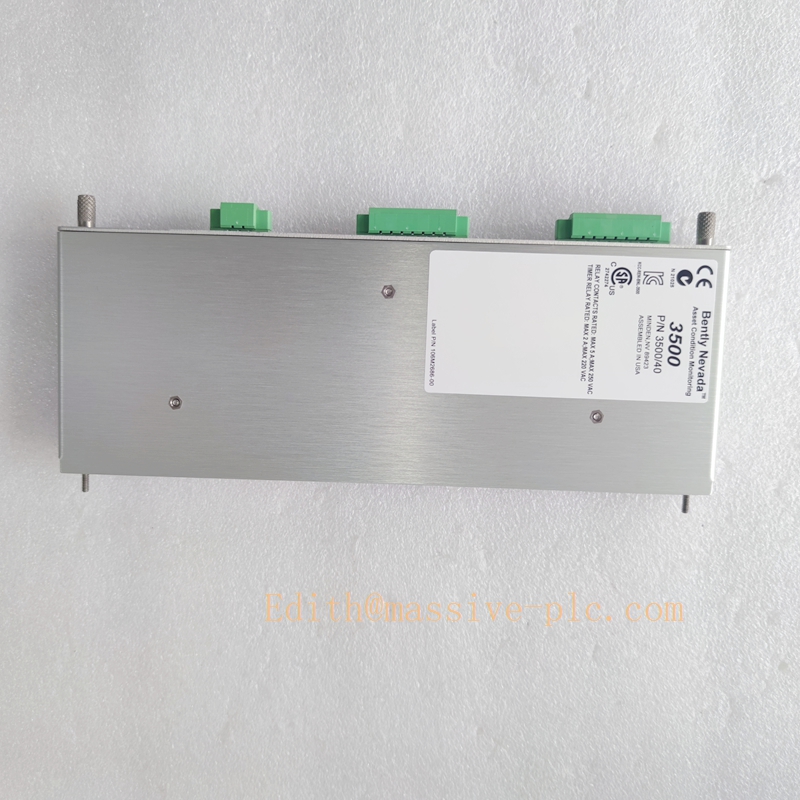
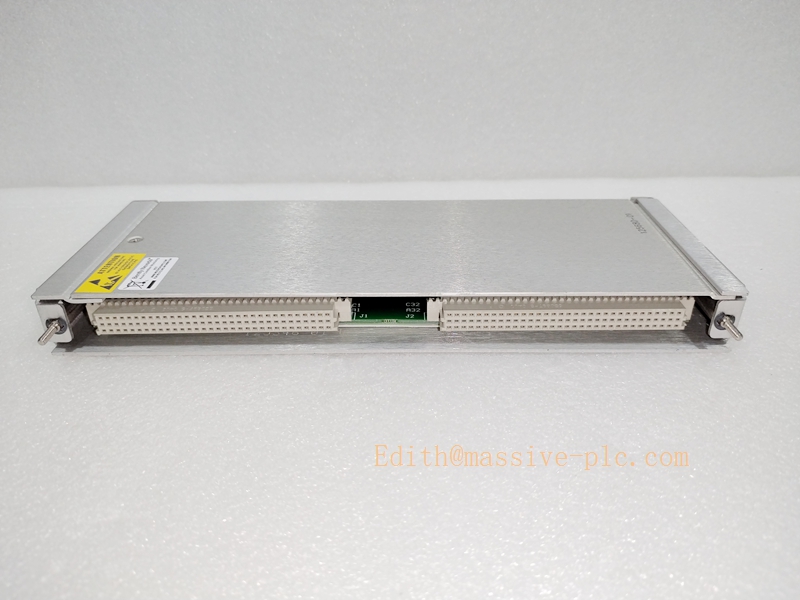
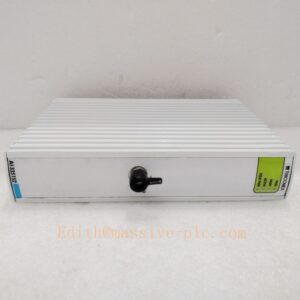
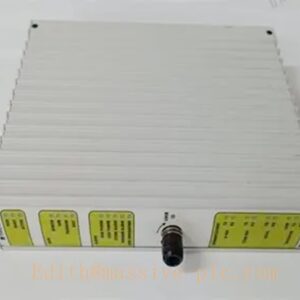
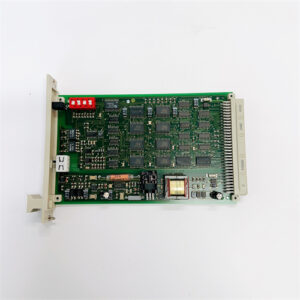
The Bently Nevada 3500/40M with part number 125680-01 is a high-performance four-channel Proximitor monitor module designed for the Bently Nevada 3500 machinery protection and condition monitoring system. It is a dedicated signal conditioning and precision measurement unit for eddy-current proximity transducer systems, specially optimized for standard industrial machinery vibration and shaft position monitoring applications. This module converts raw analog probe signals into accurate, repeatable displacement and vibration data for critical rotating equipment.
The 125680-01 variant is a standard stable revision of the 3500/40M monitor series, featuring mature circuit design, reliable signal filtering and consistent long-term operating performance. Each of the four independent channels supports flexible configuration for radial shaft vibration, thrust position, shaft eccentricity and differential expansion monitoring. Equipped with programmable dual-level alarm/trip thresholds and comprehensive transducer fault diagnosis functions, the module fully complies with API 670 industrial machinery protection standards. It provides 24/7 continuous online condition monitoring and safety protection for turbines, compressors, generators and other high-value rotating assets in power, petrochemical and heavy industrial facilities.
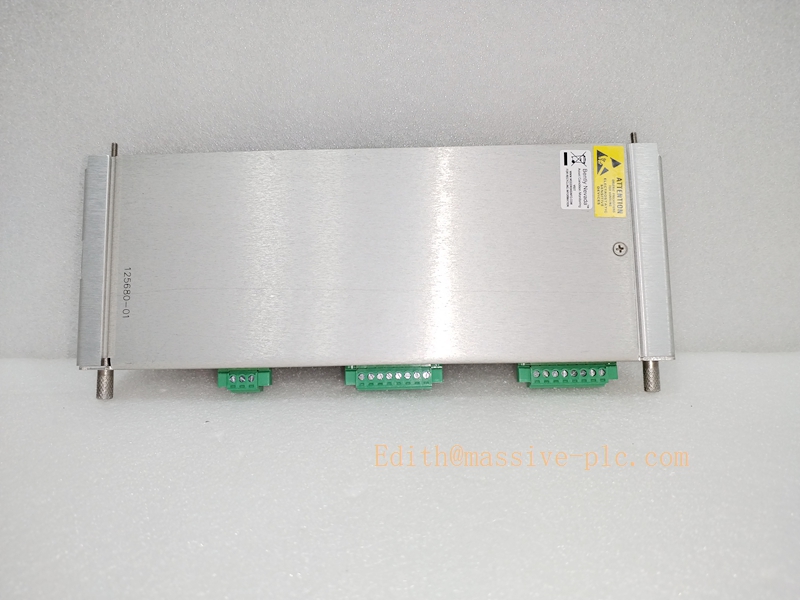
125680-01
Core Technical Specifications
| Model Number | 3500/40M, Part No. 125680-01 |
| Module Type | 4-Channel Standard Industrial Proximitor Monitor Module |
| Compatible Sensors | 3300 series eddy-current proximity probes and matched extension cable assemblies |
| Measuring Channels | 4 fully isolated, software configurable independent measurement channels |
| Monitoring Parameters | Radial shaft vibration, thrust position, shaft eccentricity, differential expansion |
| Transducer Supply Voltage | -24 VDC regulated precision sensor excitation power |
| Frequency Response | Programmable bandwidth, supports up to 15.8X machine rotational speed sampling accuracy |
| Alarm Configuration | Independent Alert (warning) and Danger (trip) thresholds per channel, full-scale adjustable with configurable delay logic |
| Power Consumption | 7.7 W typical operating power, standard industrial power design |
| Output Impedance | 550 Ω standard calibrated signal output impedance |
| Operating Temperature | -30 °C to +65 °C industrial wide-temperature operating range |
| Storage Temperature | -40 °C to +85 °C |
| System Compatibility | 100% compatible with standard 3500 rack system and official configuration software |
| Compliance Standard | API 670, industrial EMC anti-interference and safety certification |
| Installation Type | Standard 3500 series rack-mounted modular installation |
Key Features & Competitive Advantages
3.1 Core Features
- Four Fully Isolated Independent Channels: Equipped with four electrically isolated measurement channels, each channel supports independent parameter configuration and separate signal collection. The multi-channel integrated design maximizes rack space utilization and realizes simultaneous multi-parameter monitoring of rotating machinery.
- Mature Eddy-Current Signal Conditioning: Adopts classic stable signal tuning circuit for proximity transducer systems, providing reliable noise filtering, baseline tracking and high-resolution signal acquisition. It ensures stable and accurate measurement data output in conventional industrial electromagnetic environments.
- Full-Range Mechanical Condition Monitoring: Covers four core machinery monitoring modes including radial shaft vibration, thrust bearing position, shaft eccentricity and differential expansion, fully meeting the API 670 standard monitoring requirements for medium and high-speed rotating equipment.
- Dual-Level Graded Safety Protection: Each channel is configured with independent Alert warning and Danger trip thresholds with adjustable delay logic. It effectively filters transient signal interference and mechanical jitter, avoiding false alarms while ensuring timely response to real equipment faults.
- Comprehensive Transducer Self-Diagnosis: Built-in real-time fault detection function monitors probe open circuit, short circuit, signal overload and module circuit abnormality. It automatically generates fault alarms and codes to prevent invalid monitoring data and missing protection actions.
- Industrial Wide-Temperature Adaptation: Standard industrial-grade hardware design supports stable operation in -30 °C to +65 °C wide temperature range, adapting to most indoor and outdoor industrial cabinet operating environments.
3.2 Product Advantages
- Proven Long-Term Operational Reliability: As a mature mass-produced revision of 3500/40M series, the 125680-01 version has stable circuit performance, extremely low failure rate and minimal long-term signal drift after long-term field verification.
- Excellent Field Compatibility & Stability: Standard parameter calibration and universal signal adaptation match all conventional 3300 series probes and cables, ensuring seamless docking and consistent monitoring accuracy in old and new 3500 system projects.
- Highly Flexible Software Configuration: All channel functions, monitoring modes, alarm thresholds and delay parameters can be remotely modified and debugged through official 3500 configuration software, supporting rapid function adjustment without hardware replacement.
- Universal System Versatility: Plug-and-play compatible with all standard 3500 rack accessories, widely applicable for new system construction, old equipment renovation, project expansion and emergency spare part replacement scenarios.
- Balanced Cost-Performance & Maintainability: Integrated four-channel design reduces overall system module quantity and wiring complexity, lowering project investment and daily operation and maintenance costs while maintaining industrial-grade monitoring accuracy.
Typical Application Fields
The 3500/40M 125680-01 standard proximity monitor module is widely deployed in conventional industrial machinery safety monitoring and condition diagnosis scenarios with high stability and universality requirements:
- Thermal & Gas Power Generation: Shaft vibration, thrust position and eccentricity online monitoring for steam turbines, gas turbines and generator sets, providing core data support for unit safety protection and fault early warning.
- Petrochemical & Refinery Industry: Condition monitoring and safety protection for large centrifugal compressors, process pumps and high-speed rotating process equipment, preventing shaft friction, bearing wear and sudden shutdown failures.
- Oil & Gas Onshore Facilities: Standard monitoring configuration for onshore oil and gas field rotating machinery protection systems, adapting to conventional field industrial environment operation requirements.
- Metallurgy & Heavy Manufacturing: Real-time state monitoring for large industrial fans, rolling mills and transmission rotating equipment to ensure stable and continuous production operation.
- General Industrial Safety Monitoring Projects: Suitable for various industrial rotating equipment condition monitoring scenarios requiring high stability, low false-alarm rate and 24/7 unattended operation.
- 3500 System Routine Spare Replacement & Maintenance: Standard universal spare module for daily maintenance and aging module replacement of existing 3500 machinery protection systems, ensuring consistent system operation performance.
Technical Pitfalls to Avoid
- Incorrect Channel Function Configuration: Improper matching of vibration, displacement and expansion monitoring functions will lead to mismatched filtering parameters and full-scale errors, resulting in invalid monitoring data.
- Non-Standard Probe & Cable Matching: Mismatched probe models or inconsistent total cable length will cause inaccurate internal signal tuning, baseline offset and distorted measurement results.
- Unreasonable Alarm & Trip Threshold Setup: Overly sensitive thresholds cause frequent nuisance alarms, while loose threshold settings fail to capture early mechanical faults, reducing system protection effectiveness.
- Irregular Wiring & Grounding: Mixed layout of signal cables and high-voltage power cables and non-standard shielding grounding will induce EMI interference, causing signal jitter and data fluctuation.
- Neglected Probe Gap Calibration: Uncalibrated probe installation gap deviates from the linear measurement range, leading to long-term continuous monitoring inaccuracy and data deviation.
- Over-Temperature Limit Operation: Long-term operation beyond the -30 °C ~ +65 °C temperature range will accelerate component aging and trigger module over-temperature protection shutdown.
- Mismatched System Firmware Version: Inconsistent firmware versions with rack interface modules and relay output modules will cause data synchronization failure and abnormal protection logic output.
Related Product Recommendations
- 3300 Series Proximity Probes & Extension Cables: Matched eddy-current transducer accessories, providing standard vibration and displacement sensing signals for 3500/40M 125680-01 monitoring channels.
- Bently Nevada 3500/34 Relay Output Module: Supporting safety execution module, responsible for alarm and trip output execution based on 3500/40M monitoring judgment data.
- Bently Nevada 3500/20 Rack Interface Module: System core communication and scheduling unit, ensuring synchronous and stable data interaction and logic coordination of all rack modules.
- Bently Nevada 3500/15 Power Supply Module: Redundant power supply unit providing stable backplane power for long-term continuous module operation.
- 81546-01 XDCR Terminal Board: Dedicated transducer signal termination and relay output terminal board for standardized field wiring management.
- 3500 System Configuration Software: Professional tool for channel function configuration, threshold setting, signal tuning, calibration and system fault diagnosis.
Installation Guidelines
- Standard Rack Mounting: Install the module in a fully grounded standard 3500 industrial rack, placed in a dust-proof, ventilated and dry electrical cabinet to avoid corrosive gas, oil pollution and strong mechanical vibration.
- Reliable Backplane Connection: Ensure tight and stable contact between the module card edge and rack backplane to prevent communication interruption and data loss caused by loose insertion and vibration.
- Standardized Signal Wiring: Use dedicated shielded twisted-pair cables for transducer signal transmission; strictly separate weak signal wires and strong power cables, and implement single-point shielding grounding to eliminate ground loop interference.
- Precise Probe Gap Calibration: Adjust and calibrate the probe installation gap strictly in accordance with official technical specifications before commissioning to ensure measurement linearity and accurate baseline signal acquisition.
- Pre-Operation Functional Verification: Complete channel parameter configuration, signal simulation test and alarm logic verification after installation to ensure all monitoring and protection functions are accurate and effective before formal operation.
Daily Maintenance Guidelines
- Routine Status Inspection: Regularly check module operating indicators, signal connection tightness and cabinet operating environment; clean module surface and terminal dust quarterly to ensure unobstructed heat dissipation and stable operation.
- Periodic Accuracy Calibration: Conduct channel precision calibration and probe gap inspection every six months to eliminate long-term signal drift and maintain consistent measurement accuracy.
- Fault Log Analysis: Regularly export and analyze module operation logs and fault records, pre-judge sensor aging and equipment abnormal operation trends, and eliminate hidden risks in advance.
- Wiring & Accessory Maintenance: Inspect signal cable shielding layer, connectors and wiring aging status periodically, replace damaged accessories in time to avoid signal attenuation and interference.
- Spare Parts Management: Store standby 125680-01 modules in constant-temperature dry environment; perform regular power-on tests to ensure complete functional availability for emergency replacement.

 Start Chat