Description
Product Core Overview
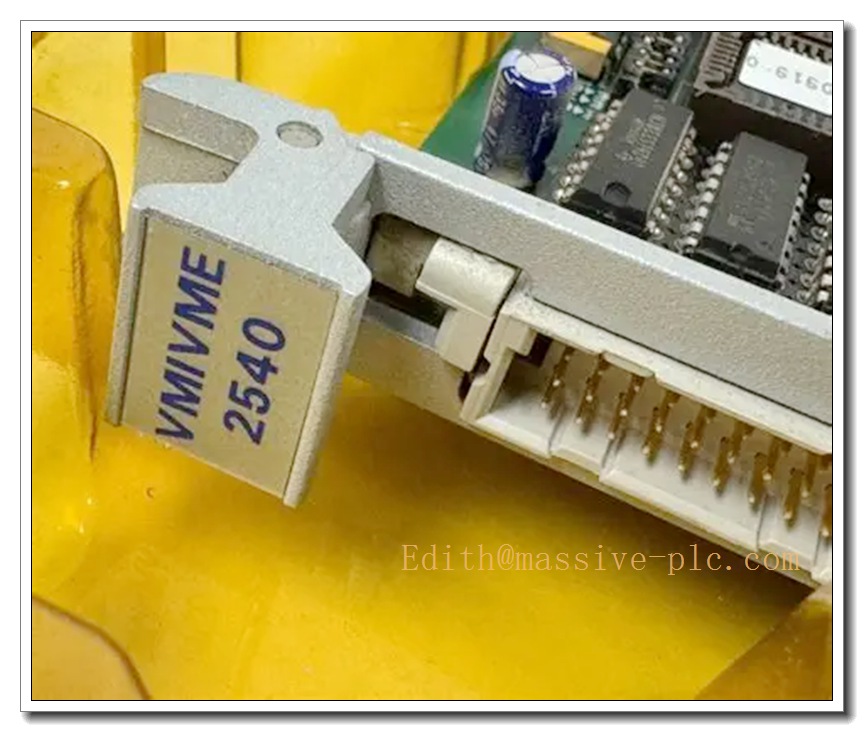
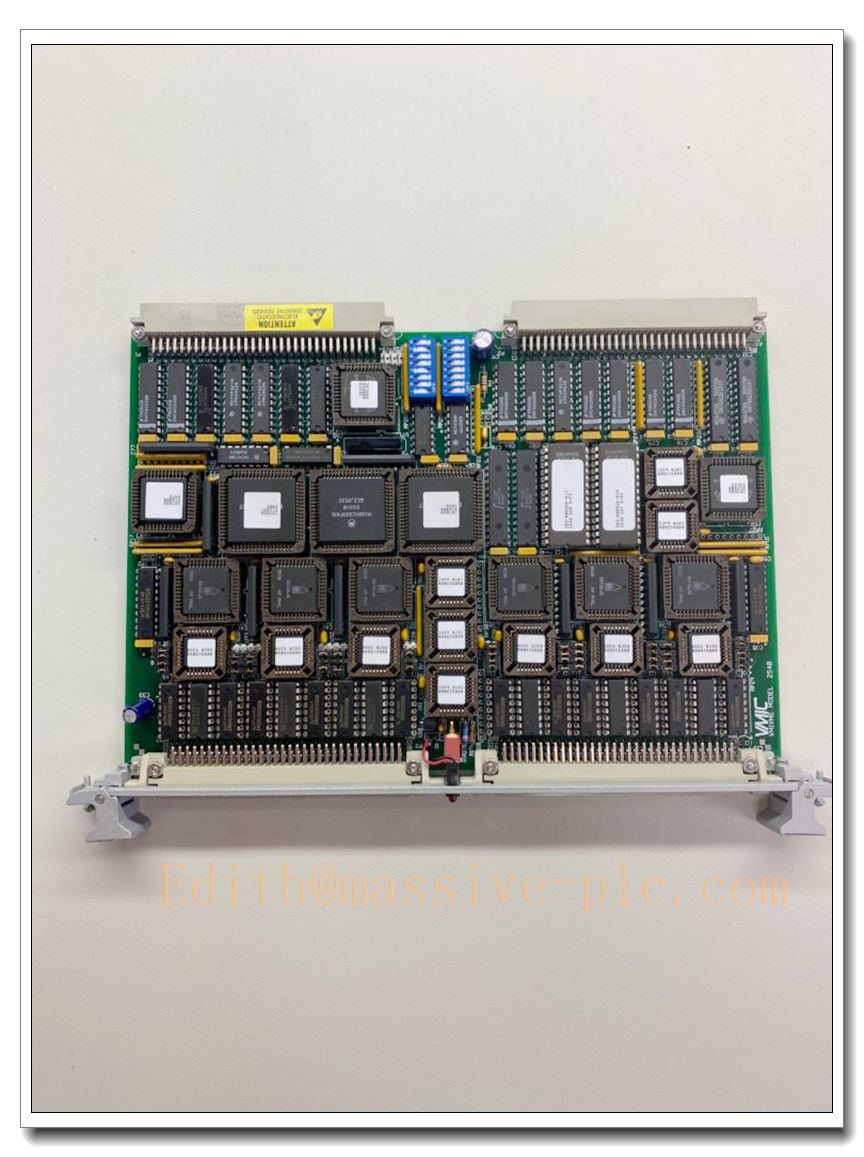
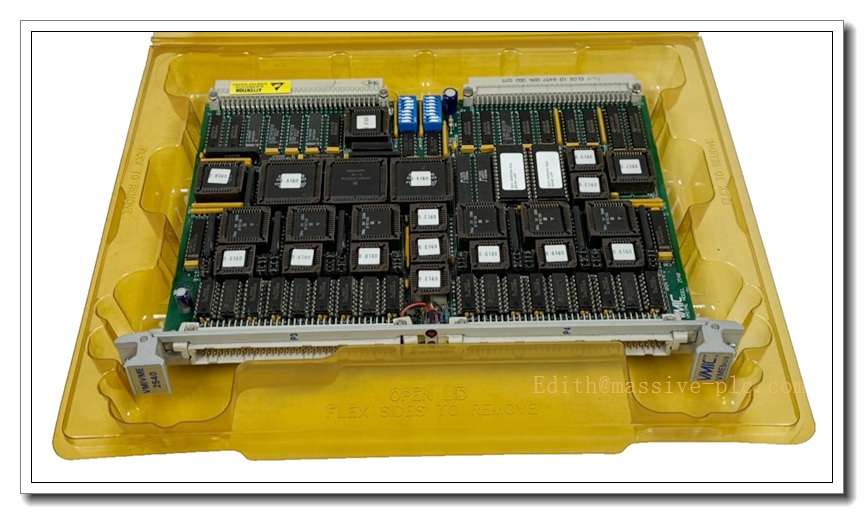
The GE VMIVME 2540-300 is a high-performance intelligent counter and digital I/O module belonging to the GE VMEbus industrial automation platform, originally developed by VMIC (now part of Abaco Systems). Built around a 15MHz Motorola 68HC000 on-board processor, it delivers ultra-high-precision event counting and independent digital control functions, offloading heavy processing workloads from the main system CPU. Fully compliant with the ANSI/VME64 standard, it is widely deployed in legacy industrial VME systems, motion control platforms and manufacturing process monitoring environments, offering exceptional long-term reliability and seamless backward compatibility with existing VME infrastructure.
Key Technical Specifications
- Core Processor: 15MHz Motorola 68HC000 16-bit industrial microprocessor, with independent local memory for on-board data processing
- Maximum Event Counting Capacity: Supports up to 4 giga events high-precision non-latched counting, eliminating count loss even under extremely high-speed pulse input conditions
- Digital Input Channels: 32 isolated high-speed digital input channels, with configurable threshold levels for TTL and industrial 24V signal compatibility
- Digital Output Channels: 24 discrete isolated digital output channels, capable of directly driving external relays, solenoid valves and indicator loads
- VMEbus Interface: Fully compliant with ANSI/VITA 1.4 VME64 standard, supporting A16/A24/A32 address spaces and D16/D32 data transfers
- Counting Performance: Maximum input pulse frequency up to 10MHz, with hardware-level anti-jitter filtering to eliminate industrial electrical noise interference
- Power Requirements: Powered directly from VME backplane, typical total power consumption 12–18W, with built-in overcurrent and overvoltage protection
- Operating Environment: 0°C to 55°C standard operating temperature, with extended temperature variants available for harsh industrial field deployments
- Physical Form Factor: Standard 6U VME footprint (233mm × 160mm), front panel equipped with dedicated status LEDs for power, run, counting activity and fault diagnostics
- Mechanical Design: Hot-swap friendly, compatible with standard VME card guide rails, supporting quick module replacement during scheduled maintenance without complex rewiring
VMIVME2540-300
8 Recommended Related Series Models
- VMIVME-2540-301: High-speed 20MHz processor variant, with expanded 8 giga events maximum counting capacity for ultra-high-speed pulse acquisition applications
- VMIVME-2540-302: Extended temperature version, supporting -40°C to +85°C operating range for outdoor and rugged field deployments
- VMIVME-7740-841: VME single-board computer with Pentium III architecture, acting as the main system controller paired with the VMIVME 2540-300 I/O module
- VMIVME-2514B: 16-channel high-speed digital I/O module, optimized for general-purpose time-critical interlock and safety logic control
- VMIVME-3122: 16-bit high-precision analog-to-digital conversion module, for process variable data acquisition in VME-based measurement systems
- VMIVME-4150: 12-channel analog output module, for closed-loop control of valves, actuators and field transmitters in VME automation platforms
- VMIVME-5565: Reflective Memory VME interface module, enabling low-latency deterministic peer-to-peer data sharing across distributed VME nodes
- VMIVME-7807: High-performance VME SBC with Intel Core Duo processor, for modernization upgrades of legacy VME systems while preserving existing VMIVME 2540-300 I/O investments
Professional Quality Control Test Standard Operating Procedure
- Pre-Test Visual Inspection: Examine the module PCB for physical damage, bent backplane pins, corroded connectors or loose components; confirm all front panel status LEDs and ejector handles are fully intact
- Power Stress Validation: Insert the module into a certified VME test chassis, apply variable DC input across the full operating voltage range, verify no overcurrent, overheating or unexpected shutdown occurs
- Firmware Integrity Check: Connect the VME system diagnostic utility, confirm firmware signature matches the official GE/VMIC release baseline, validate no corruption in on-board counting and control runtime
- Counting Accuracy Test: Input standard 1Hz to 10MHz reference pulse signals, confirm the module counts every pulse correctly with zero count loss across the full frequency range
- I/O Channel Loopback Test: Run 72-hour continuous loopback test for all 32 input channels and 24 output channels, confirm zero signal dropout under industrial electrical noise simulation
- VME Interface Compliance Test: Use a VME bus analyzer to validate A16/A24/A32 address space access, D32 data transfer performance and interrupt response under full load
- Environmental Temperature Cycling: Place the module in an environmental chamber, run full functional validation across 0°C to 55°C operating range, confirm no performance degradation or counting error at extreme temperature limits
- Final Documentation: Record all test metrics in the official GE quality log, assign unique serial number traceability tag, and issue formal performance certification report before shipment
New Module Installation Guidelines
- Pre-Installation Preparation: Power down the target VME chassis completely, confirm the backplane voltage output matches the module specification, prepare an ESD wrist strap and all required signal connection cables
- Slot Selection: Install the VMIVME 2540-300 in any empty standard 6U VME slot, ensure no adjacent slots are occupied by incompatible non-VME modules that may cause backplane signal conflicts
- Grounding and Insertion: Wear ESD protection at all times, carefully align the module with the chassis guide rails, push it smoothly into the slot until the edge connector fully mates with the backplane, then lock both front panel ejector handles to secure the board in place
- Signal Wiring Configuration: Connect all field pulse input and digital output cables using shielded twisted-pair, strictly separate low-level counting signal cables from high-power motor drive cables to eliminate electrical interference
- Power-Up and Initial Check: Restore chassis power, observe the front panel RUN LED; confirm it transitions from blinking to steady on within 60 seconds, verify the module appears on the VME bus map through the system diagnostic utility
- Function Configuration: Set the correct counting mode, input threshold level and output logic definition in the system configuration software, run a full pulse input test to validate counting accuracy before transferring to production operation
Application Scenarios and Features
- High-Speed Manufacturing Process Monitoring: Deployed in discrete manufacturing production lines, precisely counting every part passing through photoelectric sensors to track production efficiency, calculate OEE and eliminate missing part defects
- Motion Control Encoder Pulse Acquisition: Used in large-scale VME-based motion control systems, capturing high-speed encoder pulse signals from servo motors to achieve high-precision position and velocity tracking without overloading the main system CPU
- Nuclear Power Plant Legacy Control Systems: Widely deployed in nuclear power plant VME-based safety and monitoring systems, providing long-term reliable pulse counting and digital I/O functions that meet strict nuclear industry lifecycle requirements
- Aerospace Test Bench Data Acquisition: Applied in avionics and aerospace equipment test platforms, accurately counting high-speed event signals from test specimens to ensure test data integrity and traceability
- Legacy VME System Retrofit and Upgrade: Acts as a drop-in replacement for older VMIVME 2540 series modules, preserving all existing field wiring and system configuration to minimize downtime during industrial control platform modernization
Frequently Asked Questions
- Q: My module shows random count loss during high-speed pulse input, what is the most common root cause?
A: This fault is almost always caused by unshielded signal cables or incorrect input threshold configuration. First confirm the pulse signal cable is fully shielded, then re-adjust the input trigger threshold level in the module configuration to match the actual field signal amplitude. - Q: Can I directly replace an old VMIVME 2540-300 unit with a new unit without reconfiguration?
A: Full compatibility requires matching the exact firmware version and VME memory map. You can perform a direct replacement only if you preserve the existing system configuration, otherwise you must re-validate all counting mode and I/O mapping settings. - Q: What is the maximum pulse input frequency this module can reliably count without losing events?
A: The VMIVME 2540-300 can reliably count continuous pulse signals up to 10MHz, with zero event loss even under long-term full-load continuous operation conditions. - Q: Does this module require dedicated driver software to work with standard VME single-board computers?
A: No, it follows the standard VMEbus specification and supports universal VME driver libraries for all mainstream real-time operating systems including VxWorks, QNX and Linux, requiring no special custom driver development.