
Description
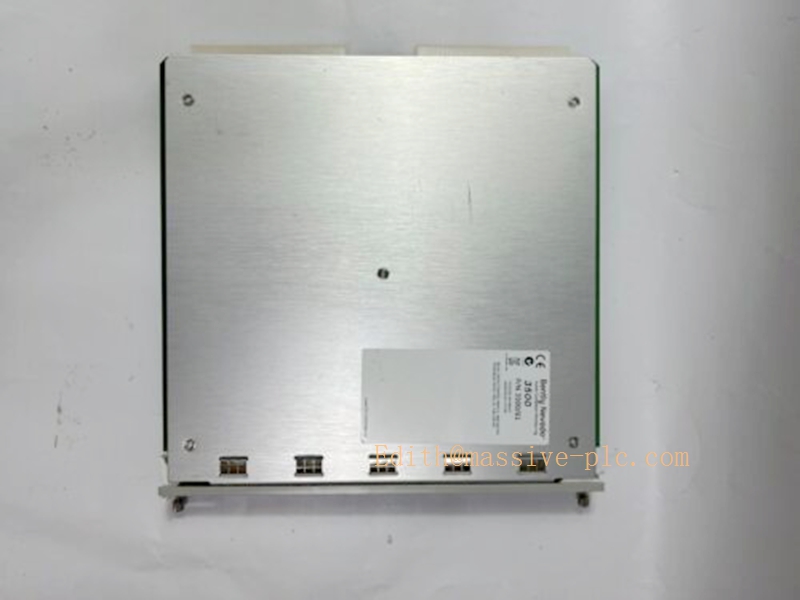
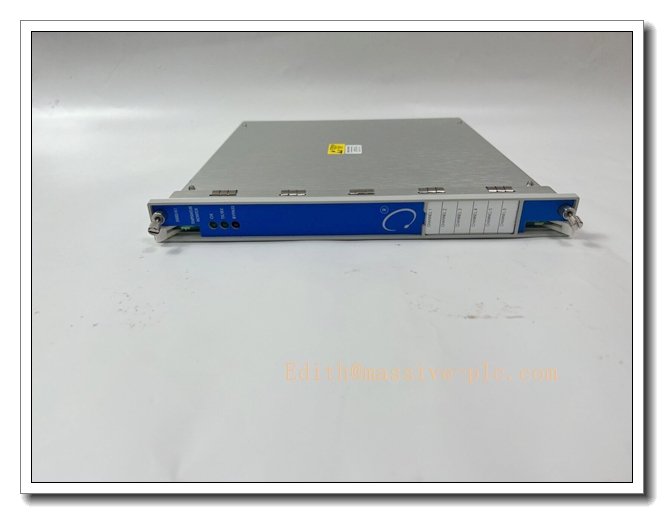
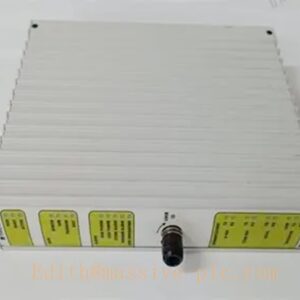
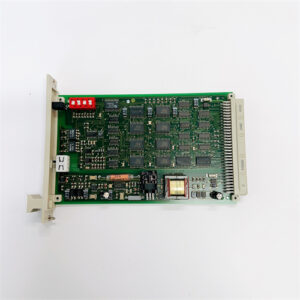
Bently Nevada 163179‑02 (3500/61 Temperature Monitor Module)
Product Description
The 163179‑02 is the hardware part number for the Bently Nevada 3500/61 six‑channel temperature monitoring module, designed for the 3500 machinery protection system. It accepts mixed RTD and thermocouple sensor inputs, executes temperature measurement, alarm logic processing, and provides isolated 4‑20 mA recorder outputs per channel for transmitting real‑time temperature data to DCS, PLC and third‑party recording devices. As a core safety‑oriented monitoring unit, it delivers continuous temperature surveillance for rotating and static critical equipment, supporting predictive maintenance and safety interlock functions in heavy‑duty industrial environments。
163179‑02
Technical Specifications
| Item | Parameter |
|---|---|
| Part Number | 163179‑02 (3500/61‑01‑00) |
| Number of Channels | 6 independent channels |
| Supported Input Types | RTD (Pt100, Pt1000); Thermocouple (K, J, T, E, N types) |
| Measuring Temperature Range | ‑200 °C ~ +1370 °C (sensor‑dependent) |
| Channel Isolation | 250 V DC channel‑to‑channel isolation |
| Analog Output | Isolated 4‑20 mA recorder output for each channel |
| Alarm Modes | High, Low, Delta‑T, Rate‑of‑Change alarms; programmable alarm delay 0‑60 s |
| Power Consumption | 9 W maximum |
| Operating Ambient Temperature | ‑22 °C ~ +65 °C |
| Storage Temperature | ‑40 °C ~ +125 °C |
| Humidity | 5 %‑95 % RH, non‑condensing |
| Safety Certification | IEC 61508 SIL 3, CE, UL approved |
| Mechanical | Hot‑swap compatible for 3500 rack; weight approx. 0.8 kg |
| Configuration Tool | 3500 Rack Configuration Software |
Main Features and Advantages
Key Features
- Mixed‑signal multi‑channel input: A single module supports hybrid connection of RTD and thermocouple sensors without external transmitters, reducing spare‑part varieties.
- Channel‑wise galvanic isolation: 250 V DC isolation eliminates ground‑loop interference and improves anti‑EMI performance for field wiring.
- Per‑channel isolated 4‑20 mA recorder outputs, enabling direct connection to distributed control systems without extra signal conditioning modules.
- Rich programmable alarm logic: multi‑mode alarms with configurable time‑delay to filter transient temperature spikes and prevent false tripping.
- Support for TMR (Triple Modular Redundancy) voting architecture to eliminate single‑point‑of‑failure and satisfy high‑safety‑requirement projects.
- Hot‑swap capability: module replacement without rack power‑off; front‑panel LED indicators for OK, Alarm, Bypass and TX status for quick on‑site diagnostics.
- SIL 3 functional safety compliance, suitable for safety instrumented system interlock loops.
Core Advantages
- Reduces system hardware cost by consolidating multi‑point temperature measurement into one compact rack‑mounted module.
- High measurement stability in noisy industrial field environments.
- Seamless integration within the 3500 machinery protection platform, sharing rack power, backplane communication and system alarm logic.
- Minimizes plant downtime via hot‑swap maintenance and intuitive status indication.
- Meets safety‑critical project requirements for machinery protection and emergency shutdown.
Application Fields
- Oil & Gas: compressors, steam / gas turbines, LNG units, pump bearing temperature monitoring
- Power Generation: generator stator winding, bearing, gearbox temperature supervision for gas‑fired and thermal power plants
- Petrochemical: reactors, turbo‑machinery, process equipment casing temperature protection
- Heavy Industry: large motors, gearboxes, fans and blowers in steel, cement and mining facilities
- General rotating machinery: critical bearing, winding and lubrication‑system temperature monitoring for predictive maintenance and safety interlock protection
Related Product Recommendations
- 3500/60 (163179‑01):Sibling temperature monitor module with identical temperature‑measuring capacity, without 4‑20 mA recorder outputs, for pure machinery‑protection‑focused projects.
- 3500/62 (163179‑03):Process Variable Monitor module, for 4‑20 mA / ±10 V analog process signal monitoring.
- 3500 series rack accessories: 3500/05 system rack, 3500/15 power supply module, I/O termination boards.
- Matching sensors: Pt100 RTD sensors, K‑type / J‑type thermocouples for bearing and winding temperature pickup.
Installation and Maintenance
Installation
- Install the module into the compatible slot of the Bently Nevada 3500 series rack. For TMR redundant deployment, install three identical 163179‑02 modules in adjacent rack slots to satisfy voting logic requirements.
- Route field RTD / thermocouple cables to the corresponding termination I/O board; strictly separate sensor signal wiring from high‑power power cables to reduce electromagnetic interference.
- Complete hardware configuration, sensor type selection, alarm threshold and delay parameter setup via the 3500 Rack Configuration Software, then download configuration to the rack backplane.
- Verify front‑panel LED status: OK lamp solid on indicates normal module operation; simulate temperature signal input to validate alarm and 4‑20 mA output performance before commissioning.
Maintenance
- Hot‑swap replacement is supported: set target channel to bypass status before pulling out the faulty module; insert new module of the same part number, and reload configuration if needed, no rack power‑down required.
- Periodically inspect field sensor cables, termination terminals for looseness, corrosion or short‑circuit faults.
- Check module front‑panel LED indicators routinely; investigate alarm, bypass or fault lamp status promptly.
- Avoid operating beyond the rated ambient temperature and humidity range. Keep the rack ventilation path unobstructed.
- Perform periodic loop calibration: inject standard temperature simulation signals to verify measuring accuracy and alarm triggering behaviour.
- For repair: return defective units to authorized service channels; do not disassemble internal circuit boards on‑site.

 Start Chat